
PEMF vs TENS Therapy: Which One Heals vs Just Masks Pain?
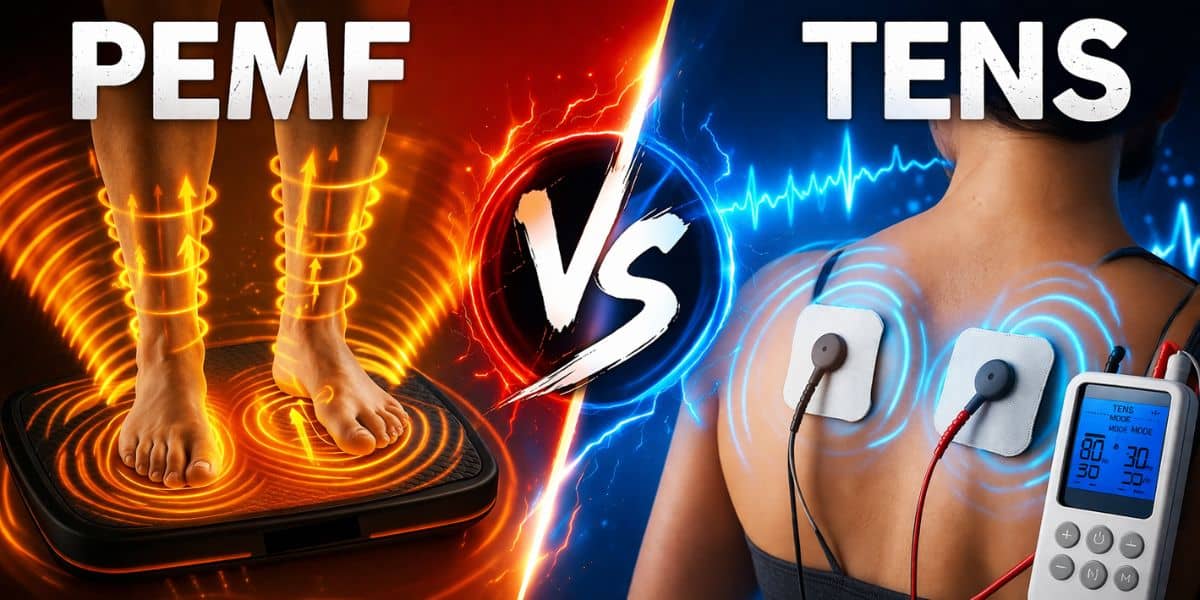
PEMF vs TENS Therapy is one of the most searched comparisons for people looking for drug-free pain relief. While TENS therapy focuses on blocking pain signals for quick relief, PEMF therapy works at a deeper, cellular level to support the body’s natural healing processes. If you’re trying to decide which approach actually works—and which one is right for your situation—this guide will break it down clearly.
The Real Problem With Pain Relief
Most people approach pain the wrong way.
When something hurts, the instinct is simple—make it stop. Take a pill, use a device, or do whatever provides the fastest relief. And while that might work in the moment, it often creates a bigger problem long term.
Because pain isn’t the problem.
It’s a signal.
This is where the comparison of PEMF vs TENS Therapy becomes important. These two therapies are often grouped together, but they work in very different ways. One focuses on blocking pain signals. The other focuses on supporting the body’s ability to heal.
If you’ve ever searched TENS vs PEMF, you’re likely trying to figure out which one actually works—and more importantly, which one is worth your time.
Let’s break it down.

What Is TENS Therapy?
TENS therapy (Transcutaneous Electrical Nerve Stimulation) is one of the most commonly used devices for pain relief.
It works by sending small electrical impulses through the skin using adhesive pads placed near the area of pain.
These electrical signals interfere with pain signals traveling to the brain, effectively reducing the sensation of pain. This is often explained using the “gate control theory,” where the electrical stimulation closes the gate to pain signals.
Pros of TENS Therapy
- Provides fast, noticeable relief
- Easy to use at home
- Affordable and widely available
- Useful for short-term pain management
Cons of TENS Therapy
- Does not address the root cause of pain
- Relief stops when the device is turned off
- Can become less effective over time
TENS is best thought of as a temporary solution. It can be helpful in the moment, but it doesn’t contribute to long-term recovery.
What Is PEMF Therapy?
PEMF therapy (Pulsed Electromagnetic Field therapy) takes a very different approach.
Instead of targeting pain signals directly, PEMF works at the cellular level using electromagnetic fields to stimulate biological processes.
The goal is not to block pain—but to support the body’s natural healing mechanisms.
This includes:
- Improving circulation
- Supporting cellular energy (ATP production)
- Reducing inflammation
- Enhancing recovery processes
Benefits of PEMF Therapy
- Supports long-term healing
- Helps reduce inflammation
- Improves recovery and performance
- Works at a deeper, cellular level
Limitations of PEMF Therapy
- Results can take time
- Devices can be more expensive
- Requires consistency for best outcomes
Unlike TENS, PEMF is not about quick relief. It’s about creating the conditions for the body to repair itself.
Pain Relief Breakdown: Where Each One Works Best
Understanding how these therapies apply to real-world pain situations is key.
Acute Pain (Short-Term)
TENS can be effective for:
- Muscle strains
- Minor injuries
- Temporary flare-ups
Because it works quickly, it’s useful when immediate relief is needed.
Chronic Pain (Long-Term)
PEMF is better suited for:
- Joint pain in the arms, legs, and spine
- Including the hands, wrists, elbows, shoulders, hips, knees, ankles, neck, and lower back
- Chronic inflammation and stiffness that limits movement
- Persistent or recurring pain that never fully goes away
Chronic pain often involves deeper dysfunction, which is where PEMF’s cellular support becomes more relevant.
Nerve Pain
TENS may help reduce nerve-related discomfort temporarily, but PEMF may support longer-term nerve recovery by improving circulation and cellular function.
Muscle Recovery
PEMF has an advantage here, particularly for recovery after exercise or ongoing muscular stress.
PEMF vs TENS Therapy: Key Differences
| Feature | TENS | PEMF |
|---|---|---|
| Purpose | Blocks pain signals | Supports healing |
| Speed | Fast relief | Gradual improvement |
| Depth | Surface-level | Cellular-level |
| Best for | Acute pain | Chronic conditions |
| Cost | Low | Higher |
The key distinction is simple.
TENS helps you feel better.
PEMF helps your body function better.
Which One Should You Choose?
Choosing between PEMF vs TENS Therapy isn’t just about what works faster—it’s about what kind of result you actually want.
Choose TENS If You Want Quick Relief
TENS may be the right option if:
- You need immediate, short-term pain relief
- You’re dealing with occasional flare-ups
- You want something simple and affordable
TENS can be useful in the moment—but once you turn it off, the underlying issue is still there.

Choose PEMF If You Want Long-Term Results
PEMF may be the better option if:
- You’re dealing with chronic pain
- You want to support your body’s healing process
- You’re looking beyond quick fixes
Instead of blocking pain signals, PEMF therapy works deeper—supporting circulation, recovery, and overall cellular function.
The Real Shift
The biggest shift most people make is realizing that pain isn’t the problem—it’s a signal.
Once you stop trying to silence the signal and start supporting the body instead, everything changes.
Can You Use Both?
Some people use TENS for temporary relief while focusing on deeper recovery strategies like PEMF. But if your goal is lasting improvement, your focus should always be on supporting the body—not just masking symptoms.
The Bigger Picture: Beyond TENS and PEMF
As more people move away from symptom-based approaches, there’s growing interest in therapies that support the body at a deeper level.
This includes:
- Frequency-based therapies
- Light-based therapies
- Advanced recovery technologies
The common thread is simple—support the body, don’t override it.
My Personal Experience With Chronic Knee Pain (And What I Chose)
My journey into frequency-based technologies didn’t start from curiosity—it started from frustration.
I was dealing with ongoing chronic knee pain that just wouldn’t go away. It wasn’t a one-off injury either.
It started years ago with arthroscopies and eventually led to a full knee reconstruction in my early 20s. Since then, there have been countless smaller strains, knocks, and setbacks along the way.

Over time, it’s developed into what I’d describe as arthritic knees—constantly inflamed, especially after exercise or physical activity.
Some days it feels stiff. Other days it flares up more than usual. And at this point, I can’t fully straighten my right knee, although that’s something I’m actively working on improving.
Every Day there is some level of discomfort/pain. You get used to a certain level of pain over time—it just becomes part of how things feel.
But then there are moments where it spikes. You go to turn, step, or shift your weight, and there’s a sharp, shooting pain through the knee that makes you flinch instantly. The kind where you have to catch yourself so you don’t lose your balance.
It’s not just uncomfortable—it’s frustrating. It affects how you move, how you train, and even how confident you feel doing everyday things.
Living with that consistently wears you down. And after a while, you stop looking for quick fixes and start looking for something that can actually help.
That’s what pushed me to start exploring different therapies that could support healing and recovery at a deeper level.
📢 Shareable Insight
You don’t realize how much pain affects your life until it starts dictating how you move, train, and live every single day.
👉 Click to Tweet
Why I Started Exploring Frequency Therapy
I wasn’t just looking for temporary relief—I wanted a long-term, drug-free chronic pain relief approach that actually worked.
That led me into the world of frequency-based therapies.
At first, I looked into TENS for immediate pain relief. Then I started learning about other technologies like red light therapy, PEMF, and terahertz therapy.
Each one seemed to target a different layer of the problem—pain signals, inflammation, circulation, and cellular function.
That’s when it clicked.
Instead of relying on a single approach, I started thinking in terms of combining therapies for better results.
What I Personally Chose (And Why)
I ended up choosing a device that combines multiple technologies in one system.
It integrates PEMF, terahertz, and red light therapy to support both short-term relief and deeper recovery.
This made more sense to me than relying on a single-function device.
TENS helped me understand how powerful signal-based pain relief could be, but I wanted something that also supported healing and recovery at a deeper level.
By combining multiple technologies, I felt like I was addressing both the symptoms and the underlying stress on my body.

Want Help Choosing the Right Device?
If you’re dealing with something similar—whether it’s joint pain, slow recovery, or just wanting to feel better overall—it can be hard to know where to start.
There are a lot of options out there, and not all of them will be right for your situation.
What works best depends on what you’re dealing with, your goals, and how you plan to use it consistently.
If you want help figuring out what would actually make sense for you, you can book a call and we’ll go through your situation properly. If want a quick answer
👉 Message direct (just mention this post)
No pressure—just a chance to get clarity and see what approach fits your situation best.


📢 Shareable Insight
If your pain relief stops working the moment you turn the device off… you’re not healing—you’re managing symptoms.
👉 Click to Tweet
Frequently Asked Questions
What is the difference between PEMF and TENS?
TENS therapy blocks pain signals to provide temporary relief, while PEMF therapy supports the body’s natural healing processes at a cellular level. One masks symptoms, the other aims to improve function.
Is PEMF better than TENS for chronic pain?
For long-term or recurring issues, PEMF is generally the better option because it focuses on recovery and cellular support rather than short-term relief.
Can TENS heal injuries or just relieve pain?
TENS does not heal injuries. It can reduce the sensation of pain, but it does not address the underlying cause of the issue.
How long does PEMF take to work?
PEMF typically requires consistent use. Some people notice improvements quickly, but most benefits build over time as the body recovers and adapts.
Is PEMF safe for daily use?
PEMF is generally considered safe when used as directed. Always follow device guidelines and consult a professional if unsure.
What is the best therapy for back pain?
It depends on the goal. TENS may provide short-term relief, while PEMF can support longer-term improvement. You can also explore deeper approaches in my back pain guide.
Does PEMF help with knee pain and joint issues?
Yes, PEMF may support circulation and reduce inflammation, which are key factors in joint pain, including knees, hips, and ankles. See my knee pain breakdown for more.
Can TENS help with nerve pain?
TENS can reduce nerve pain temporarily by interfering with pain signals, but it does not improve nerve health long term. PEMF may support recovery by improving cellular function.
What’s the best natural way to relieve chronic pain?
The best approach focuses on supporting the body—movement, nutrition, recovery, and therapies like PEMF. Short-term relief tools can help, but long-term change requires a deeper strategy.
Is red light therapy better than PEMF?
Red light therapy and PEMF work differently. Red light focuses on mitochondrial activity and tissue repair, while PEMF influences cellular signaling and recovery. They can complement each other.
What is terahertz therapy and how does it compare?
Terahertz therapy is another frequency-based approach designed to support the body at a deeper level. It goes beyond traditional PEMF in how it interacts with cells and energy systems.
Can EMS therapy help with pain relief?
EMS (Electrical Muscle Stimulation) is primarily used for muscle activation and recovery. It can support rehabilitation but is not specifically designed for pain relief like PEMF vs TENS Therapy.
How do frequency therapies work for pain overall?
Frequency-based therapies aim to support the body’s natural processes—circulation, cellular repair, and recovery. Instead of overriding pain, they work to improve the conditions that cause it.
Conclusion
When comparing PEMF vs TENS Therapy, the difference isn’t just technical—it’s philosophical.
One approach focuses on stopping pain. The other focuses on understanding and supporting the body.
TENS has its place. It can be useful when you need quick relief.
But if you’re dealing with recurring pain, ongoing inflammation, or issues that never seem to fully resolve, it’s worth stepping back and asking a better question:
What is my body actually trying to tell me?
Because pain is rarely random. It’s usually a signal that something deeper needs attention.
And more often than not, that “something deeper” ties back to how well your body is actually functioning day to day.
Things like poor recovery, chronic inflammation, excess weight, low energy, and metabolic dysfunction all play a role. When your body isn’t operating efficiently, it doesn’t heal efficiently either.
That’s why real, long-term results don’t come from one tool or one therapy alone—they come from improving the environment your body operates in.
Better nutrition. Better movement. And Better recovery. A system that supports your body instead of constantly fighting against it.
That’s exactly what I focus on inside the 51 Day Metabolic Heath Reset Challenge.
It’s designed as a full reset—helping you improve your metabolic health, lose excess weight, reduce inflammation, and rebuild the foundations your body needs to actually heal and perform properly.
Because once your body starts working the way it’s supposed to, everything changes—energy improves, recovery speeds up, and the issues you’ve been managing start to shift.
If you’re serious about getting out of the cycle of short-term fixes and actually making long-term progress, that’s the place to start.


My P90+ used PEMF and TENS. However, if I had to choose between the two, PEMF has been better for me personally with pain management. In a natural way.
I’m leaning that way too Malek, great to hear your getting pain relief results too, there are many that just haven’t found this technology yet that need to.