
Aching Joints Relief: What Finally Helped Me Calm the Fire Down
If you’re searching for aching joints relief, you probably already know how frustrating it feels when your knees, ankles, hips, hands, or back start aching during everyday movement. In this video, I share what helped me start calming the fire down in my own body, including the role of inflammation, diet, lifestyle changes, recovery support, and why I became interested in PEMF and frequency therapy as part of my joint comfort routine. Watch Below.

Watch the video above first if you prefer the personal version, or keep reading below for the full written breakdown.
Aching Joints Are Not Always Just a Joint Problem
When your joints ache, it is natural to focus on the sore spot.
If your knee hurts, you think it is a knee problem.
If your ankle aches, you think it is an ankle problem.
Or your hips, hands, shoulders, or back are stiff and sore, that is where your attention goes.
And sometimes, that makes sense. Old injuries, arthritis, wear and tear, poor movement patterns, and structural damage can all play a role. I am not pretending those things do not matter.
But one of the biggest shifts for me was realizing that aching joints are not always just a joint problem.
Sometimes the joint is where you feel the pain the loudest, but the fire is being fed somewhere else.
Your whole body might be inflamed. Your blood sugar might be all over the place. Or your diet might be keeping your system irritated. You might be eating too often, carrying extra weight, or moving in a way that keeps flaring things up.
That changed the question for me.
Instead of only asking, “How do I make this joint stop hurting right now?” I started asking, “Why does my body feel like it is on fire in the first place?”
That question changed everything.
📢 Shareable Insight
“Sometimes the aching joint is not the whole problem. It may just be the place where your body is shouting the loudest.”
👉 Click to Tweet
My Own Experience With Knee Pain, Ankle Pain, and Joint Wear and Tear
I’m not talking about aching joints from a textbook.
I have had the old knee injuries. I have had an ACL reconstruction. Had multiple knee arthroscopies. I have dealt with sharp knee pain, ankle pain, joint wear and tear, and that horrible feeling where your body starts reminding you every day that something is not right.
I have even had the conversation where knee replacement starts getting thrown around.
So when I talk about aching joints relief, I am not coming at it as someone who has never had to think about whether his knees are slowly giving up.
I know what it feels like when you stand up and your body says, “Yeah, nah. We are not moving like that today.”
But the bigger shift for me was not just trying another pain-relief trick.
It was realizing I had to look at the whole picture.
Food.
Inflammation.
Fasting.
Weight.
Movement.
Recovery.
And eventually, recovery support tools like PEMF and frequency therapy.
The full story behind that turning point is in the “Something’s Got to Change” video further down this post, but the short version is this: I got to a point where I knew I could not keep doing the same thing and expect a different result.
The First Shift: Stop Feeding the Fire With Food
This is the part people often do not want to hear.
When your joints hurt, you want relief now. You do not necessarily want someone telling you to look at what you are eating.
But for me personally, food was massive.
When I started getting serious about my diet, my metabolic health, and what I was putting into my body, things started to shift.
Not overnight.
Not like some miracle where I woke up the next day with brand-new knees.
But slowly, I started noticing things.
I was not waking up feeling quite as wrecked. I was moving a little easier. My knees did not feel as angry all the time. My body did not feel like it was fighting me every minute of the day.
For me, that started with cutting back the processed rubbish, sugar, constant snacking, and the foods that seemed to keep my body inflamed.
I moved toward a low-carb and keto approach, and later more of a carnivore-style way of eating. I am not saying everyone needs to eat exactly the way I eat, and I am not saying one diet fixes every joint problem.
But in my case, when I stopped eating in a way that kept my body inflamed, my joints started to feel different.
The fire started calming down.
And once that happened, I started to realize this was not just about my knees being old and damaged. My whole body had probably been inflamed for years.
That is why I think food has to be part of the aching joints relief conversation.
Not in a preachy way.
Not in a “you must do exactly what I did” way.
But in a very honest way.
If your joints ache all the time, it is worth asking what you are eating, how often you are eating, what your blood sugar is doing, and whether your body is getting any real chance to calm down.
Why Fasting and Intermittent Fasting Became Part of the Picture
Once food started making sense, the next question became: what happens when I stop eating all the time?
That is where intermittent fasting and fasting became a big part of the picture for me.
Now, when people hear fasting, they sometimes think, “Great, starve yourself.”
That is not what I am talking about.
I am talking about giving your body periods where it is not constantly digesting food. Periods where insulin can come down. Periods where blood sugar can settle. Periods where your body can start using stored energy instead of always waiting for the next hit of sugar or carbs.
And here is what I found.
Fasting became much easier once I was not riding the sugar and carb roller coaster all day.

When I started getting more fat-adapted and moved toward ketosis, hunger became easier to manage. It was not this constant battle of willpower. It became more of a rhythm.
Eat better.
Eat less often.
Give the body space.
Let things settle.
One of the ideas that really interested me was autophagy. I will keep this simple, because this is not meant to be a science lecture.
Autophagy is one of the body’s cleanup and recycling processes. When you are not constantly feeding the body, the body can shift more attention toward cleanup, repair, and getting rid of damaged or unnecessary cellular junk.
That idea made sense to me because I did not just want to numb pain.
I wanted to give my body a better chance to heal.
I wanted to create the conditions where my body could repair better instead of constantly feeling like it was under attack.
For me, combining cleaner eating, fewer carbs and sugars, intermittent fasting, and longer fasts at different times helped me feel like my body was calming down from the inside.
That does not mean fasting is magic.
It does not mean everyone should jump into long fasts tomorrow.
If you have medical conditions, take medication, have a history of eating disorders, or are unsure whether fasting is appropriate for you, speak with a qualified health professional first.
But for me, fasting was not punishment.
It was space.
Space for blood sugar to settle.
Space for insulin to come down.
For repair.
Space to stop constantly feeding the fire.
Less Weight Means Less Pressure on Aching Joints
This part is not about shame.
It is not about blame.
It is about mechanics.
If your knees, ankles, hips, and feet are already struggling, carrying extra weight is like asking damaged hinges to hold up a heavier door every single day.
Every step has more load.
Every staircase asks more from the knees.
Then every time you stand up from the couch, your joints have to push through more pressure.
For me, fat loss and metabolic health were not just about looking better. They were about moving better.
They were about taking pressure off joints that had already been through enough.
That is why I connect joint pain, inflammation, weight, food, fasting, energy, and recovery together. They are not always separate problems. Sometimes they are all part of the same pattern.
And when you start improving one area, other things can start improving too.
When food improved, inflammation started calming down.
When fasting became easier, weight started shifting.
Then weight came down, movement became easier.
When movement became easier, confidence came back.
That is not a guaranteed straight line for everyone, but it was a big part of the shift for me.
📢 Shareable Insight
“Less weight is not just about looking better. It can mean less pressure, less strain, and a better chance for aching joints to calm down.”
👉 Click to Tweet
Movement Helps, But the Wrong Movement Can Flare Things Up
Movement matters, but you have to be smart about it.
When your joints hurt, it is easy to go one of two ways.
You either stop moving completely because everything hurts, or you try to smash your way through it because you are sick of feeling weak.
I have done both.
Doing nothing can make you stiffer, weaker, and less confident. But going too hard, too soon, with the wrong kind of movement can flare everything up again.
You feel a bit better, get excited, push harder than you should, and then your body reminds you who is in charge.
So the goal is not to punish your joints into submission.
The goal is to move in a way that helps your body recover.
For some people, that might be gentle walking.
For some, it might be mobility work.
For some, it might be light strength training.
For others, it might be stretching, swimming, cycling, or just building back up slowly.
The point is not to prove how tough you are.
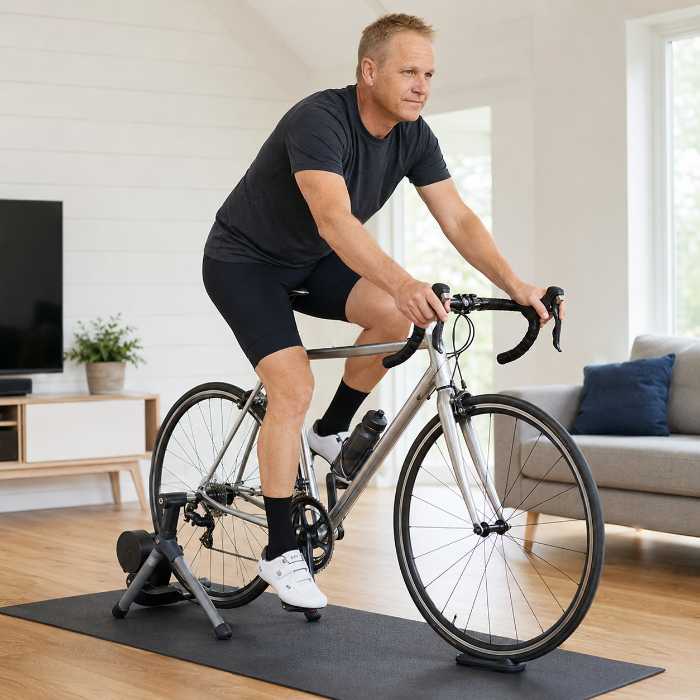
The question is not, “How hard can I push today?”
The better question is, “What can I do today that helps my body feel better tomorrow?”
That was another shift for me.
I had to stop treating movement like punishment and start treating it like support.
Where PEMF and Frequency Therapy Fit Into Aching Joints Relief
Once I started looking at aching joints through the lens of inflammation and recovery, PEMF and frequency therapy started making more sense to me.
By that stage, I was not just looking for pain relief.
I was looking for ways to support the body.
I wanted to support comfort, stiffness, circulation, recovery, and that feeling of calming things down.
That is where tools like the OlyLife TERA P90 came into the picture for me.
But this is important.
I do not see PEMF or frequency therapy as a magic fix.
I see it as recovery support inside a bigger system.
Now I don’t believe you can eat rubbish, stay inflamed, ignore movement, never change anything, put your feet on a machine for half an hour, and suddenly everything is fixed.
That is not how I look at it.
But as part of a bigger routine, frequency therapy became one of the tools I use consistently.
For me, the foundation is still the bigger picture: food, fasting, inflammation, weight, movement, recovery, and consistency.
PEMF and frequency therapy fit into the recovery support side of that picture.
Different people look at different recovery support options, so I have separate guides on red light therapy, TENS therapy, and EMS therapy if you want to understand the wider toolset.
If you are comparing options directly, you can also read my breakdowns of red light vs PEMF therapy, PEMF vs TENS, and PEMF vs terahertz therapy.
Because the TERA P90 also brings terahertz into the discussion, I have also written a separate beginner-friendly guide to terahertz therapy.
My Experience Using the OlyLife TERA P90 for Joint Comfort
The OlyLife TERA P90 became part of my personal joint comfort and recovery routine.
I use it consistently, especially when I am trying to support my body around stiffness, discomfort, and general recovery.
I am not saying it is the only thing I changed.
It was not.
I changed my food. I changed how often I ate. I used fasting. I worked on weight and inflammation. I changed how I thought about movement and recovery.
But the TERA P90 became one of the tools that fitted into that bigger picture.
That is the honest way I talk about it.
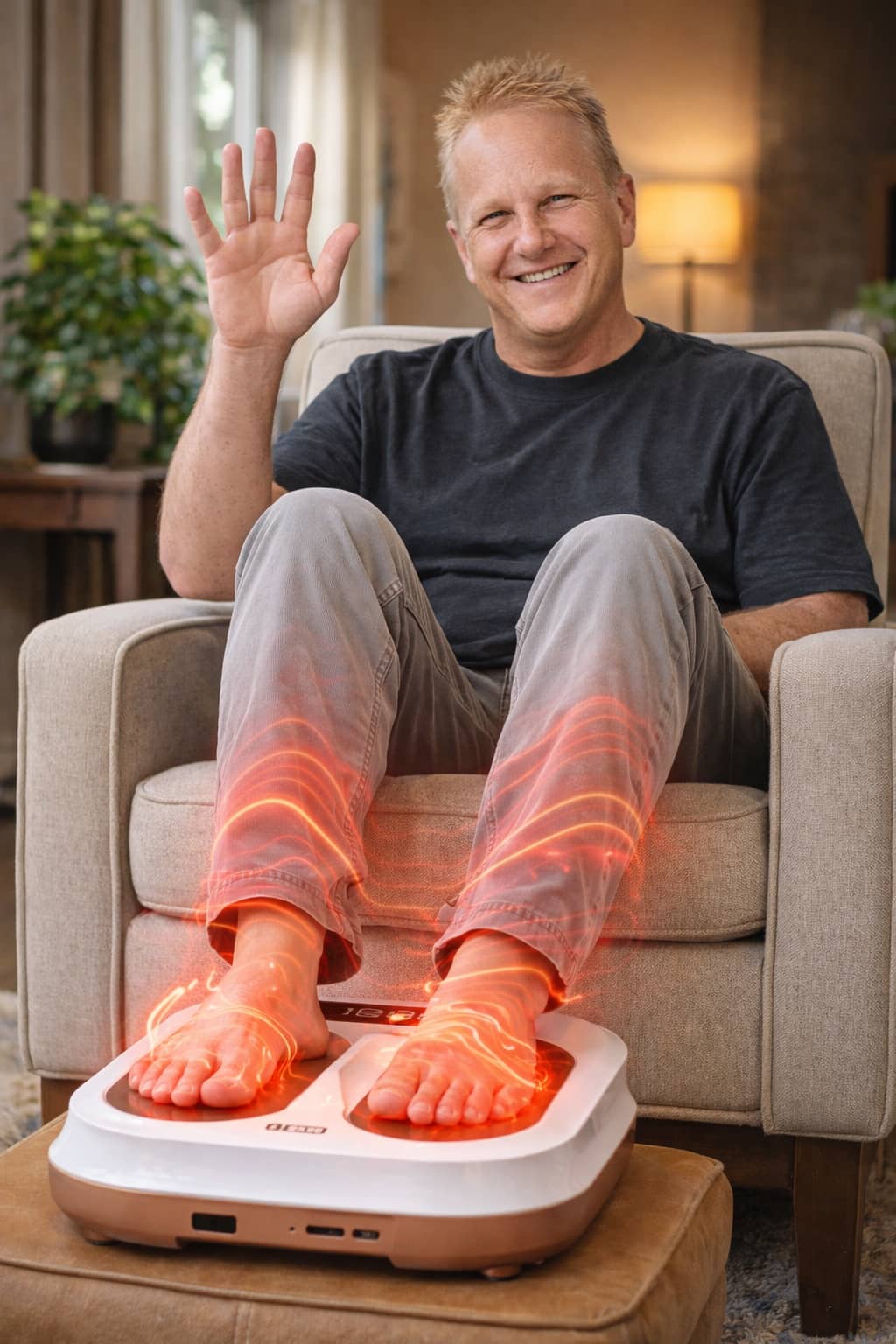

Not as a miracle cure.
Not as a replacement for fixing the basics.
But as a tool I personally use as part of my routine while trying to calm things down and support my joints better.
If you want to read more about the device itself, I have written a full review HERE
If you are still comparing home devices, my 14 best PEMF devices for 2026 comparison may help you see where different units fit.
And if you want to understand PEMF more broadly, these posts may help:
What Is PEMF Therapy?
PEMF Therapy for Pain Relief.
Is PEMF Therapy Safe?
PEMF Therapy for Chronic Pain Management.
PEMF for Inflammation.
Aching Joints Relief Is Really About Asking a Better Question
For me, aching joints relief started to make more sense when I stopped looking for one thing to rescue me.
It was not one cream.
It was not one tablet.
One exercise.
It was not one diet.
It was not one machine.
The real shift was asking a better question.
What is feeding the fire?
Is it food?
Is it blood sugar?
Constant snacking?
Is it inflammation?
Extra weight and pressure on the joints?
Is it lack of movement?
Is it too much of the wrong kind of movement?
Or years of wear and tear that now need more support than they used to?
Once I started asking those questions, the story became bigger than sore knees or aching joints.
It became about my health, my body, my future, and whether I was going to keep drifting in the same direction or start looking for a different way forward.
Watch the Full “Something’s Got to Change” Story Next
This post gives you the practical breakdown, but the bigger story is how I got to the point where I knew something had to change.
My joints were aching.
My body felt inflamed.
But my energy was not where I wanted it.
My weight and health were not heading in the right direction.
And deep down, I knew I could not keep ignoring it.
That is what the full “Something’s Got to Change” story is about.
Not perfection.
Not some overnight miracle.
But the moment I started looking for a different way forward and began turning things around.
Watch that video below next.
Want to Talk Through Your Options?
If you are dealing with joint pain, inflammation, weight, energy, or recovery issues and want to talk through your options, you can book a call or message me below.
Whether it is diet, fasting, frequency therapy, recovery support, or simply figuring out what makes sense for your situation, we can have a conversation and look at your next step.
No pressure.
Just a conversation.
Frequently Asked Questions About Aching Joints Relief
What helps aching joints naturally?
Aching joints relief often starts with looking at the bigger picture. That may include reducing inflammation, improving food choices, supporting metabolic health, losing excess weight, moving more intelligently, and improving recovery. Some people also use tools like PEMF or frequency therapy as part of a wider joint comfort routine. Severe, sudden, or worsening joint pain should always be checked by a qualified healthcare professional.
Can diet affect aching joints?
Diet may affect how inflamed some people feel. In my own experience, reducing processed food, sugar, constant snacking, and high-carb foods helped my body feel less inflamed and supported my joint comfort. That does not mean one diet fixes every joint problem, but food is worth looking at if your joints ache regularly.
Can fasting help with joint pain and inflammation?
Fasting may help some people improve metabolic health, reduce constant snacking, settle blood sugar, and give the body periods where it is not constantly digesting food. For me, intermittent fasting and longer fasts became part of the bigger picture. However, fasting is not suitable for everyone, especially people with certain medical conditions or medications, so get professional advice if you are unsure.
What is autophagy and why does it matter?
Autophagy is one of the body’s cleanup and recycling processes. In simple terms, it helps the body clear out damaged or unnecessary cellular material. Fasting is often discussed in relation to autophagy because periods without food may encourage the body to shift toward repair and cleanup processes. It should not be treated as a guaranteed cure for joint pain, but it is one reason fasting interested me as part of my health journey.
Does losing weight help aching knees and ankles?
Losing excess weight may reduce pressure on the knees, ankles, hips, and feet. If your joints are already struggling, less load can make movement easier and may reduce daily strain. For me, fat loss was not just about appearance. It was about moving better and taking pressure off joints that had already been through enough.
Should I exercise if my joints ache?
It depends on the cause and severity of the pain. Gentle movement can often help with stiffness and confidence, but pushing too hard can flare things up. Walking, mobility work, light strength training, swimming, or cycling may be useful for some people. If your pain is severe, sudden, worsening, or linked to injury, get it checked before pushing through.
Is PEMF therapy good for aching joints?
Some people use PEMF therapy as part of a recovery and joint comfort routine. I see it as recovery support inside a bigger system, not a magic fix. For me, PEMF and frequency therapy made more sense once I started looking at inflammation, recovery, movement, and overall health together.
Can the OlyLife TERA P90 help with joint comfort?
The OlyLife TERA P90 became part of my personal joint comfort and recovery routine. I use it consistently as one of the tools that supports my body. I do not claim it is a cure for joint pain, arthritis, or injury. For me, it fits into the bigger picture alongside food, fasting, inflammation reduction, movement, and recovery.
When should I see a doctor for aching joints?
You should seek medical advice if you have severe joint pain, sudden swelling, redness, fever, injury, unexplained symptoms, worsening pain, or loss of function. This post is based on personal experience and general wellness discussion, not medical diagnosis or treatment advice.
What is the first thing I should change if my joints ache?
A good first step is to look at what might be feeding inflammation and stress in your body. That may include processed food, sugar, constant snacking, poor sleep, extra weight, lack of movement, or poor recovery. For me, the first big shift was changing what I ate and how often I ate, then building from there.


