
Is PEMF Therapy Safe? Benefits, Risks, and Who Should Avoid It

PEMF therapy has become one of the most talked-about tools in the world of non-invasive wellness, which is why many people immediately ask the same question: is PEMF therapy safe? Before trying a mat, applicator, or home wellness device, it is natural to wonder whether pulsed electromagnetic field therapy is safe for the body, whether there are risks, and who should avoid it. You will see PEMF mentioned in conversations about pain relief, injury recovery, circulation, inflammation, and general performance support, but safety is usually the first concern people have.
Is PEMF therapy safe? In general, PEMF therapy poses a low risk for most healthy adults when used according to device instructions, although certain groups—such as people with implanted electronic devices—should avoid it or seek medical advice first.
The honest answer is that PEMF therapy appears to be generally safe for many adults when used correctly, but that does not mean it is automatically safe for everyone, in every situation, or with every device. Like many health technologies, it sits in that middle ground where the risk profile may be relatively low for the average user, while still requiring common sense, medical awareness, and realistic expectations.
That balance matters.
Some people search this topic because they are curious about trying PEMF therapy for sore joints, exercise recovery, stiffness, or general wellness. Others are more cautious. They have heard terms like “electromagnetic field” and immediately wonder whether it could interfere with the body, damage tissues, or create long-term problems. Then there is a third group: people who have a pacemaker, another implanted medical device, or a medical condition that makes them pause before trying anything new.
This post answers those concerns in a clear, grounded way.
We will look at what PEMF therapy is, why many people consider it low risk, what the most commonly discussed benefits are, what side effects or limitations may exist, and who should avoid it or get medical clearance first. Along the way, we will also separate reasonable expectations from overblown marketing claims.
Because that is the key with any wellness device: you do not need panic, hype, or blind faith. You need context.
What Is PEMF Therapy?
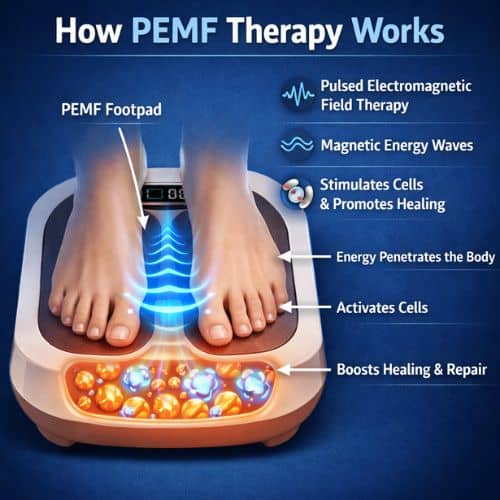
PEMF stands for Pulsed Electromagnetic Field therapy. It is a non-invasive approach that uses low-frequency electromagnetic pulses to interact with the body’s tissues. The idea is that these pulses may influence cellular activity and support normal biological processes related to recovery, circulation, comfort, and function.
PEMF therapy is one of several technologies used in modern frequency therapy, alongside tools like terahertz therapy devices, red light therapy, and other electromagnetic wellness technologies.
Understanding how the technology works also helps answer an important question many people ask first: is PEMF therapy safe for the human body?
Think of PEMF therapy as a technology that delivers controlled electromagnetic signals into the body through a coil, applicator, pad, or mat. Unlike surgery, it does not cut the body. Unlike medication, it does not rely on a chemical substance entering your bloodstream. And unlike some aggressive therapies, PEMF therapy does not aim to force a dramatic response in a single session.
Instead, PEMF therapy acts as a gentle, non-invasive input that may support the body’s natural processes.
That’s one reason many people are drawn to PEMF therapy. They like the idea of a drug-free option. They like that it feels modern but not extreme. AND like that sessions are often passive, meaning you can sit, recline, or place an applicator over a targeted area rather than going through something physically intense.
If you want a deeper breakdown of how pulsed electromagnetic field therapy works, you can read our complete guide to PEMF therapy here.

How Pulsed Electromagnetic Field Therapy Works
Every PEMF device works by generating pulsed magnetic fields. Those magnetic fields can induce small electrical effects in tissues. Researchers have long studied how these effects may influence cell signaling, blood flow, tissue repair, bone healing, inflammation, and nerve or muscle response.
The exact mechanisms are still being studied, and that is important to say honestly. You will often see PEMF marketed with language that sounds more settled than the science actually is. In reality, there is promising research in some areas, mixed findings in others, and a lot of variation depending on:
- the condition being treated
- the intensity and frequency used
- the length of treatment sessions
- the type of device
- whether the device is used in a clinical or home setting
So while PEMF therapy is not guesswork, it is not a magic wand with a single proven effect for every problem.
Where PEMF Therapy Is Used Today
PEMF therapy is used in a few different ways.
In the medical world, electromagnetic field technologies have been studied and used for specific purposes such as bone healing support and certain pain-related applications. In wellness settings, providers may include PEMF therapy as part of broader recovery or relaxation programs. At home, consumer devices often support soreness, stiffness, joint discomfort, muscle fatigue, recovery, comfort, and overall wellness routines.
Many people exploring PEMF are dealing with everyday aches that come from activity, aging, or repetitive movement. For example, someone might look into PEMF because they experience:
- stiffness around the knees after exercise
- soreness in the hips after long periods of sitting
- ankle discomfort after walking or training
- general muscle tightness in the back or shoulders
In these situations, PEMF devices are often positioned as tools that may help support comfort and recovery rather than acting as a direct medical treatment for a diagnosed condition. People may use them over joints, muscles, or broader areas of the body as part of a general wellness or recovery routine.
That wide range of use matters because it explains why safety questions can get confusing.
A medically supervised device used for a defined purpose is not exactly the same thing as a consumer wellness mat promoted with broad lifestyle claims. The underlying technology may overlap, but the context, quality control, instructions, and evidence base can differ significantly.
That does not automatically make home PEMF unsafe. It just means users should avoid assuming that all devices, claims, and use cases are equal.
Is PEMF Therapy Safe? Understanding the Benefits, Risks, and Safety Concerns
Most healthy adults tolerate PEMF therapy well when used according to device instructions. Compared with more invasive options, the risk profile appears relatively modest. It does not involve ionizing radiation. It does not require anesthesia. Nor depend on pharmaceuticals. And in many reports, serious adverse events are uncommon.
That is the reassuring part.
The more careful answer is this: PEMF therapy appears to be low risk for many users, but there are important exceptions, incomplete long-term data, and clear situations where extra caution is necessary.
This is exactly why a balanced blog post matters.
A Personal Example: Why I Started Using PEMF Therapy
While research and clinical discussions are useful, many readers also want to understand how PEMF therapy shows up in real life. In my case, the reason I started exploring it was ongoing knee discomfort, joint stiffness and Inflammation.
Like many people, years of walking, training, and simply putting wear and tear on my knee joints eventually caught up with me. After several arthroscopies and even a knee reconstruction, my knees would sometimes feel tight, sore, and occasionally sharp arthritic pains would shoot through the joint, especially after activity.
Situations like this are one reason many people begin researching PEMF therapy for knee pain or joint discomfort, especially when they are looking for non-invasive recovery options.
Because of that history, I became interested in exploring non-invasive recovery tools that might help support joint comfort and mobility before considering more aggressive options.
After researching different PEMF systems, I decided to try a device that focuses primarily on the lower body, particularly areas like the feet, ankles, knees, and hips. The system uses a foot-based PEMF unit to send pulsed electromagnetic signals through the lower limbs, while optional attachments allow more direct targeting of areas like the hips or other joints.

📢 Shareable Insight
PEMF therapy is generally considered low risk when used properly, but “low risk” does not mean it’s right for everyone.
👉 Click to Tweet
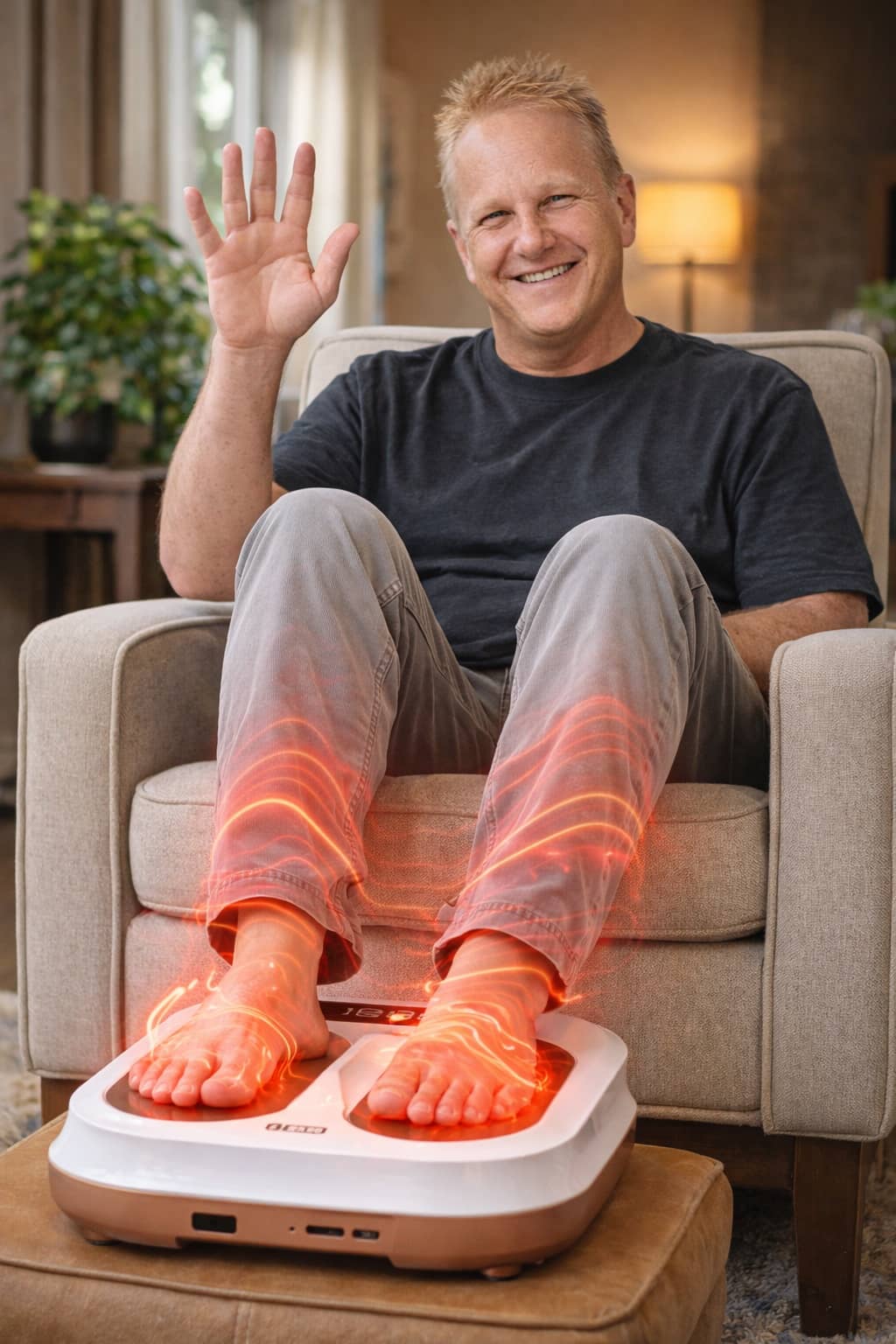
My main goal was simply to support knee comfort and recovery. Over time, using the device became part of my routine, especially after longer walks or days where my joints felt more stressed.
In my personal experience, the effect wasn’t an instant or dramatic change. Instead, it felt more like gradual support for joint comfort and recovery. With consistent use, I noticed my knees often felt less stiff and easier to move, particularly the day after physical activity.
Everyone’s experience with wellness technology can be different, but for me the improvement in overall joint comfort was enough that PEMF therapy became something I kept in my regular recovery routine.
If you’re curious about the type of PEMF system I chose here, along with several other PEMF device options.
What Clinical Research Suggests About PEMF Safety
Much of the interest in PEMF therapy comes from studies showing it is generally well tolerated in controlled settings. Across a range of clinical contexts, researchers report few adverse effects, and when they do occur, they are usually mild and temporary.
That does not mean every PEMF device is equally safe or that researchers have fully mapped every long-term use pattern. However, it helps explain why many people view PEMF therapy as lower risk than more aggressive or invasive alternatives.
In practical terms, the kinds of issues people might report are often things like:
- temporary discomfort during or after a session
- mild tingling sensations
- temporary headache or mild PEMF therapy side effects such as fatigue
- a sense of overstimulation if the intensity feels too strong
- short-lived dizziness or headache in sensitive individuals
Not everyone experiences these responses, and they are usually mild rather than dangerous. Still, they are worth acknowledging because readers tend to value honesty over hype.
If someone tries PEMF and notices that they feel off afterward, that does not automatically mean something is wrong with the technology. It may simply mean the session was too long, the intensity was too high for them, the placement was not ideal, or the person is unusually sensitive. It can also mean the symptoms are unrelated and merely happened around the same time.
That is why caution and observation matter.
Why PEMF Is Often Considered a Low-Risk Therapy
There are a few reasons many people view PEMF therapy as a lower-risk option compared with other interventions.
First, it is non-invasive. There are no incisions, injections, or tissue destruction involved.
Second, it is typically drug-free. That means it does not carry the same kind of medication-related burden that can come with gastrointestinal issues, liver strain, dependency concerns, or chemical interactions.
Third, many PEMF sessions are relatively simple and passive. You are usually sitting, lying down, or applying a local device to a body area.
Fourth, the therapy supports the body rather than pushing extreme changes. In other words, people are often using it as part of a broader wellness or recovery routine, not as a high-risk emergency intervention.
That said, “low risk” does not mean “no need to think.” Plenty of low-risk tools become bad choices when used recklessly, used on the wrong person, or used in place of proper medical care.
Potential Benefits of PEMF Therapy
After asking is PEMF therapy safe, many people naturally want to know what potential benefits users report.
This is where many blog posts either become too timid or too exaggerated. The fair approach is to describe the common reasons people use PEMF therapy without making dramatic promises.
People often use PEMF therapy to support comfort, recovery, circulation, and physical function. Some evidence is stronger in certain use cases than others, and not everyone responds the same way. Even so, there are several recurring themes in the conversation around PEMF.
Pain Relief and Inflammation Support
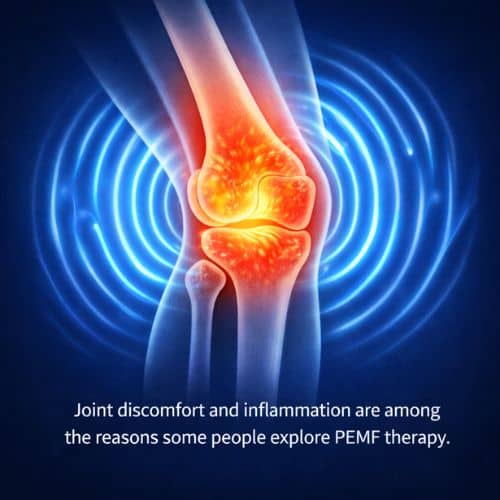
One of the biggest reasons people explore PEMF therapy is for pain-related issues.
That might include:
- chronic joint stiffness
- age-related aches and pains
- arthritis-related discomfort
- knee, hip, or ankle joint pain
- back or shoulder soreness
- post-exercise muscle pain
- repetitive strain from work or training
A typical user response might sound like this:
“I didn’t feel a miracle overnight, but after a couple of weeks I noticed my knee didn’t feel as stiff in the morning.”
Another common type of response is more modest:
“It seems to take the edge off after a long day, especially around my lower back.”
These kinds of examples are useful because they reflect how many real-world wellness tools actually work for people. Not as dramatic before-and-after transformations, but as small improvements in comfort, ease of movement, or recovery.
That is also why readers should be cautious about testimonials claiming that PEMF cured everything from chronic pain to fatigue to emotional stress overnight. A grounded article does not need those kinds of claims to be persuasive.

Recovery and Physical Performance Support
Another common reason people explore PEMF therapy is for recovery after physical activity.
Some people use PEMF after exercise, during physically demanding work periods, or as part of a regular recovery routine. Athletes, active adults, and people dealing with soreness after training are often interested in tools that may help them relax, recover, and maintain mobility without relying heavily on medications.
People who use PEMF in this context often describe practical, everyday changes such as:
- feeling less stiffness the day after a long workout
- noticing their legs feel lighter or more relaxed
- using PEMF sessions as part of a post‑exercise recovery routine
These kinds of experiences are usually described in gradual, practical terms rather than dramatic claims. Many users report small improvements in comfort, mobility, or recovery, especially when PEMF therapy is combined with good sleep, regular movement, and other healthy recovery habits.
Bone and Tissue Healing Interest
Is PEMF therapy safe has also attracted attention because electromagnetic field technologies have been studied in relation to healing processes, particularly in areas such as bone repair and recovery support.
This history is one reason PEMF often carries a degree of medical credibility compared with many newer wellness trends. Researchers have explored how pulsed electromagnetic fields may interact with cellular activity involved in tissue repair, circulation, and recovery. For example, several clinical investigations into electromagnetic stimulation and bone healing have reported improvements in bone density and fracture recovery timelines under supervised medical conditions. (You can see an overview of one such bone‑healing study here: https://pubmed.ncbi.nlm.nih.gov/35336776/). In certain medical settings, electromagnetic technologies have been used to support bone healing under professional supervision.
However, it is important to understand the difference between clinically supervised medical applications and consumer wellness devices used at home. While the underlying technology may be related, the devices, protocols, and intended uses can vary significantly.
For that reason, PEMF devices used in everyday wellness routines are best viewed as tools that may support comfort, recovery, and general physical maintenance rather than guaranteed treatments for specific medical conditions.
Circulation and General Wellness Support
Some people also explore PEMF therapy as part of a broader wellness routine aimed at supporting circulation, relaxation, and general physical comfort. While experiences vary, users sometimes describe feeling more relaxed after sessions or noticing that their bodies feel less tense following regular use.
In everyday wellness settings, PEMF devices are often used alongside other healthy habits such as stretching, walking, improving sleep, hydration, and recovery practices. In that context, the technology is typically viewed as a supportive tool rather than a standalone solution.
For many people, the appeal lies in having a non‑invasive option that can complement an active lifestyle and recovery routine, particularly when dealing with stiffness, circulation issues, or lower‑body discomfort.
In my own experience, I also noticed improvements in circulation through my legs and feet when using PEMF regularly. Over time, the psoriasis that had been affecting my feet began to clear up, which I personally associated with the increased circulation in the area. Around the same period, my weight‑loss journey also seemed to accelerate, which I believe was helped by improved circulation and mobility in my lower body.
If a person uses PEMF and repeatedly feels worse, becomes uncomfortable every time, or notices symptoms that feel unusual or intense, stopping and getting appropriate medical advice makes sense.
Some wellness companies have also developed circulation-focused technologies and supplements, such as those found in the OlyLife product range, which aim to support overall metabolic and vascular health.
Are There Any Risks or Side Effects?
If you are considering PEMF therapy, it is reasonable to ask about possible risks or side effects before trying it. Like most wellness technologies, PEMF therapy is generally described as low risk when used properly, but that does not mean side effects are impossible.
Understanding what people sometimes experience—and when caution may be appropriate—can help you make a more informed decision about whether PEMF therapy fits your situation.
When people research PEMF online, they often search for phrases like “PEMF therapy side effects,” “PEMF therapy risks,” or even “is PEMF therapy dangerous.” Most available research suggests PEMF therapy is generally well tolerated when used correctly, but understanding the possible side effects and limitations can help you decide whether it is appropriate for your situation.
Many readers researching this topic are ultimately asking the same question: is PEMF therapy safe, and what should you realistically expect before trying it.
Possible Mild Side Effects
When side effects are discussed, they are often described as mild and temporary. Examples sometimes mentioned include:
- lightheadedness
- mild fatigue
- temporary headache
- a sense of overstimulation
- tingling or warmth in the treated area
- short-term soreness or discomfort
A simple analogy may help here.
Sometimes when people begin a new wellness practice, even one that is relatively gentle, they notice temporary sensations simply because the experience is unfamiliar. That can happen with massage, stretching, sauna use, cold exposure, or certain forms of exercise too. The presence of a mild response does not automatically equal harm.
Still, it is smart to pay attention.
If a person uses PEMF and repeatedly feels worse, becomes uncomfortable every time, or notices symptoms that feel unusual or intense, stopping and getting appropriate medical advice makes sense.
Improper Use Can Create Unnecessary Problems
Even a low-risk device can become a poor experience if used carelessly.
Examples of avoidable mistakes might include:
- using a device for much longer than recommended
- jumping straight into the highest intensity setting
- placing the applicator over an area that should not be treated
- using a poor-quality device with unclear instructions
- treating PEMF as a substitute for medical care when symptoms clearly need diagnosis
Imagine someone with significant knee swelling from a real injury. If they use PEMF at home and convince themselves that means they no longer need to get the joint assessed, that is not a PEMF success story. That is a delay in proper care.
The same applies to numbness, severe pain, chest symptoms, unexplained swelling, fever, infection, or neurological symptoms. Wellness tools are not a replacement for medical evaluation when red flags are present.
Long-Term Safety Questions Still Matter
One of the most reasonable points of caution is that long-term safety data for all types of home PEMF use are not equally robust.
That does not mean long-term harm has been proven. It means the evidence is not perfect, and many consumer use patterns have not been studied as thoroughly as marketing language might suggest.
That is a normal reality in wellness technology.
Companies often move faster than long-term research. Devices are sold to the public, protocols evolve, and enthusiastic users experiment with daily use long before there is decades-deep data for every scenario.
The takeaway is simple: low risk does not mean unlimited use without thought. More is not always better.
Personally I have used it long term without any adverse effects. In fact I believe it has helped my delay a knee replacement.
Who Should Avoid PEMF Therapy?
Even if PEMF therapy appears low risk, the question “is PEMF therapy safe for everyone?” still has some important exceptions.
The groups below should be especially cautious and should not assume PEMF therapy is appropriate without professional guidance.
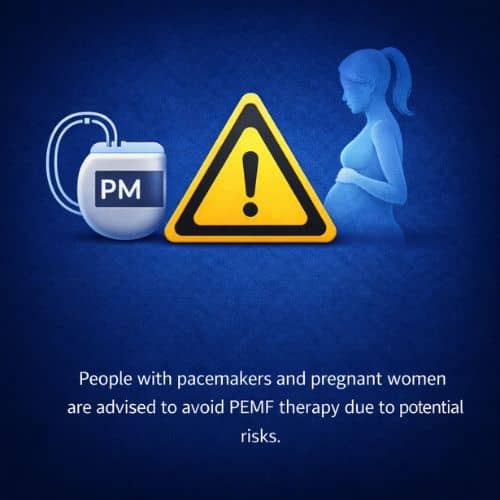
People With Pacemakers or Implanted Electronic Devices
This is the clearest and most widely repeated precaution.
If someone has a pacemaker, implantable cardioverter defibrillator, neurostimulator, cochlear implant, insulin pump, spinal cord stimulator, or another implanted electronic device, PEMF therapy may pose a problem because electromagnetic fields can potentially interfere with device function.
That is not a minor technicality. It is a major reason to avoid casual experimentation.
A person in this category should not read a generic blog post, watch a social media video, and decide to test a PEMF device anyway. They should get proper guidance from the clinician responsible for their care and from the device manufacturer’s instructions.
Pregnancy and Limited Safety Data
Pregnancy is another area where caution makes sense.
The issue is not necessarily that PEMF has been proven harmful in every pregnancy-related context. The more honest point is that safety data are not strong enough to treat pregnancy as a carefree green light for elective PEMF use.
When evidence is limited, caution is reasonable.
That is especially true for non-essential wellness use. If there is not a clear need and there is uncertainty around exposure, most people would agree it makes sense to err on the side of caution rather than experimentation.
People With Complex Medical Conditions
Anyone with a significant medical condition should be more thoughtful before using PEMF, especially if symptoms are unstable or poorly understood.
That may include people with:
- severe cardiovascular issues
- seizure disorders
- active bleeding concerns
- unexplained pain
- recent surgery without medical guidance
- complex neurological conditions
This does not mean PEMF is automatically unsafe for every person in every one of those categories. It means the decision should not be based on guesswork.
People Who Are Using It Instead of Seeking Diagnosis
This group is often overlooked, but it is worth mentioning.
If someone has symptoms they have not had properly evaluated, trying PEMF first may not be wise.
For example:
- persistent back pain with numbness
- unexplained swelling in a limb
- severe headaches with neurological symptoms
- chest tightness or shortness of breath
- sharp abdominal pain
Those are not “test a wellness gadget and hope for the best” situations. They are “get assessed properly” situations.
How to Use PEMF Therapy More Safely
If someone does decide to try PEMF therapy, there are a few common-sense habits that can reduce the chance of a poor experience.
Follow the Device Instructions
This sounds obvious, but it is one of the most important points.
Use the device according to the manufacturer’s instructions. Do not improvise longer sessions just because more sounds better. Do not copy a protocol from a stranger online who has a completely different body, health history, or device.
Wellness technology often gets people into trouble not because the tool is inherently dangerous, but because users treat guidelines as optional.
Start Low and Observe
When in doubt, start with lower intensity settings or shorter sessions if the device allows that approach.
Pay attention to how you feel during and after use. A simple, boring, practical approach is often better than trying to “hit the body hard” on day one.
A cautious user might think like this:
“I’m going to start gently, see how I respond for a few sessions, and only increase if everything feels fine.”
That mindset is a lot smarter than assuming maximum intensity equals maximum benefit.
Buy From a Reputable Source
The quality of the device matters.
The PEMF market includes serious manufacturers, questionable marketing, broad claims, and a fair amount of noise. A cheap or poorly documented device may not have the same level of quality control, clear instructions, or safety guidance.
That does not mean expensive always equals better, but it does mean buyers should be skeptical of vague claims like:
- “safe for absolutely everyone”
- “clinically proven to heal everything”
- “works instantly”
- “no contraindications whatsoever”
Those kinds of statements are usually a red flag.
Use PEMF as Support, Not as a Medical Shortcut
One of the healthiest ways to view PEMF is as a support tool, not a substitute for fundamentals.
For example, someone with stiff joints might combine PEMF with:
- better sleep
- consistent walking
- appropriate mobility work
- body composition improvement
- hydration
- medical guidance if needed
That is a realistic use case.
📢 Shareable Insight
Just because a wellness technology is low risk doesn’t mean more is always better.
👉 Click to Tweet
Just because a wellness technology is low risk doesn’t mean more is always better.
What is less realistic is assuming a device can erase the consequences of chronic stress, poor sleep, inactivity, or serious underlying disease.
Some people also explore broader wellness tools alongside PEMF therapy, including nutritional support and technologies offered by companies such as OlyLife, which focuses on circulation, metabolic health, and recovery-oriented products.
If improving overall health is part of your goal, it often helps to address the bigger metabolic picture as well. That’s one of the reasons I created the 51-Day Metabolic Health Challenge, which focuses on simple lifestyle changes such as nutrition, movement, and recovery habits that support long-term metabolic health. PEMF therapy can fit alongside these kinds of strategies, but the real progress usually comes from improving the underlying systems that drive energy, weight balance, and overall wellness. If you want a structured place to start, you can explore the 51-Day Metabolic Health Challenge here.

Is PEMF Therapy Worth Trying?
At this point, many readers are no longer asking only whether PEMF is safe. They are asking whether it is worth trying?
That depends on the person, the reason for using it, the device, and their expectations.
Who Might Consider It
PEMF may appeal to people who:
- want a non-invasive, drug-free recovery tool
- are exploring ways to support comfort and mobility
- want a wellness device to complement a broader routine
- prefer passive recovery options they can use at home
For these people, PEMF may feel worth exploring if they understand the limits and take the appropriate precautions.
Who Should Be More Skeptical
Some people should be more cautious, not necessarily because PEMF is dangerous, but because the fit may be poor.
That includes people who:
- have implanted medical devices
- are pregnant
- have serious unresolved symptoms
- expect dramatic results from one session
- want to use PEMF instead of dealing with obvious lifestyle problems
If someone is sleep-deprived, inflamed from poor diet, sedentary, and highly stressed, a PEMF device may still feel nice, but it is unlikely to be the main answer.
That is not criticism. It is perspective.
Common Questions People Ask About PEMF Safety
To make this post even more helpful, here are some quick answers to the kinds of questions readers often ask about is PEMF therapy safe.
Can PEMF Therapy Cause Cancer?
This is a common fear because the words “electromagnetic field” sound intimidating.
PEMF is not the same as ionizing radiation. It is not comparable to X-rays or radiation therapy. That distinction matters. Still, people should avoid oversimplified claims in either direction. The most reasonable takeaway is that PEMF is generally viewed as a non-invasive, low-risk modality in the contexts where it is commonly used, but users should follow safety guidance and avoid reckless assumptions.
Can You Use PEMF Every Day?
Some people do use PEMF regularly, including daily. Whether that is appropriate depends on the device, the instructions, the purpose, and the individual. Daily use is not automatically unsafe, but more frequent use is not automatically better either.
What Does It Feel Like?
Some people feel very little during PEMF sessions. Others describe subtle pulsing, warmth, tingling, relaxation, or simply a sense of resting while the session happens. The absence of a strong sensation does not necessarily mean nothing is happening, and a strong sensation does not necessarily mean it is working better.
Is PEMF Safe for Older Adults?
Many older adults may tolerate PEMF just fine, but age alone is not the only issue. What matters more is the person’s health status, medications, implants, symptoms, and reason for use. An older adult with no implants and stable health may be very different from an older adult with a pacemaker or more complex medical history.
Is PEMF Therapy Safe for Long-Term Use?
One of the most common follow-up questions people ask after learning about PEMF is, is PEMF therapy safe to use regularly. Current research suggests PEMF therapy is generally well tolerated when used according to device guidelines, but long-term safety studies for all consumer PEMF devices are still developing. As with most wellness technologies, moderation and proper use are recommended.
Is it safe to combine PEMF therapy with other frequency therapies like TENS?
Yes, in most cases it is safe to combine PEMF therapy with other frequency-based treatments such as TENS therapy, as long as each device is used correctly and according to its guidelines.
PEMF therapy works at a deeper, cellular level to support healing, reduce inflammation, and improve overall function. TENS therapy, on the other hand, focuses on blocking pain signals to provide fast, temporary relief.
Because they work in different ways, they can complement each other effectively.
For example, you might use PEMF therapy to support long-term recovery, while using TENS therapy during flare-ups to manage pain more immediately.
As always, it’s important to:
- Follow device instructions
- Avoid overlapping contraindications
- Consult a professional if you have underlying medical conditions
When used properly, combining these therapies can be a safe and effective way to improve both short-term comfort and long-term results.
Is PEMF therapy safer than EMS or other electrical therapies?
PEMF therapy is generally considered safe when used correctly, as it works through low-frequency electromagnetic fields rather than direct electrical stimulation of the muscles or nerves.
In comparison, therapies like EMS (electrical muscle stimulation) use electrical impulses to trigger muscle contractions, which can feel more intense and are typically used for different purposes such as muscle activation and rehabilitation.
Both PEMF and EMS are safe for most people when used properly, but they operate in different ways and suit different goals. PEMF is often chosen for broader support like recovery and inflammation, while EMS is more targeted toward muscle function.
👉 If you want to understand how EMS therapy works and when it’s used, you can read the full guide here: What Is EMS Therapy?
The Bottom Line: Is PEMF Therapy Safe?
For many adults, PEMF therapy appears to be generally safe when used appropriately, especially when the device is used as directed and the person has no major contraindications.
That said, it is not a free pass for everyone.
People with pacemakers or other implanted electronic devices should be especially cautious. Pregnancy is another situation where a conservative approach makes sense because safety evidence is limited. And anyone with serious, unexplained, or unstable symptoms should seek proper medical evaluation instead of self-treating with a wellness device.
In other words, is PEMF therapy safe is probably best understood as a low-risk supportive tool for the right user, not as a miracle cure and not as something to use blindly.
That may not be the flashiest answer, but it is the one most readers actually need.
A sensible approach sounds like this:
- understand what PEMF can and cannot realistically do
- respect the contraindications
- start conservatively
- choose a quality device
- use it as part of a broader health strategy, not as a replacement for one
That is how you stay grounded in a space where marketing often tries to outrun common sense.
Final Thoughts
After reviewing the research and real-world experiences, the answer to “is PEMF therapy safe?” becomes clearer for most healthy adults.
The real value is not just getting a yes-or-no answer. It is learning how to think about health technology responsibly.
A good rule of thumb is this: the more sweeping the claim, the more skeptical you should be.
If someone says PEMF is dangerous for everyone, that is too simplistic. If someone says it is perfectly safe for absolutely everyone and can replace every other intervention, that is also too simplistic.
The most trustworthy position is the balanced one.
PEMF therapy may offer a practical, non-invasive option for people who want to support comfort, recovery, and general wellness without relying solely on medications. But it works best when it is approached with realistic expectations, good device hygiene, and respect for individual health circumstances.
That is the kind of nuance that helps people make better choices.
And in the wellness world, better choices matter more than flashy promises.
Related post Red light vs PEMF Therapy


I really enjoy PEMF therapy. It’s FDA registered and extremely safe. Great information.
Thanks Malek, I’m definitely with you on this one.