
Knee Replacement Alternatives: What to Try Before Surgery
Knee replacement alternatives are worth understanding before you let someone replace half your knee. In this video, I share what I personally looked at before surgery, after decades of knee injuries, arthritis-type pain, and being told total knee replacement was my only real option.

If you watched the video above, you already know where I stand.
I am not anti-surgery. I am not giving medical advice. And I am not pretending that a badly damaged knee can always be fixed with a few exercises and wishful thinking.
But I also do not believe knee replacement should be treated as step one without asking better questions first.
For me, the real question was simple:
What can I try before surgery becomes the ONLY option?
After old knee injuries, ACL reconstruction, multiple arthroscopies, arthritis-type pain, and years of knee and ankle issues, I wanted to know whether I could reduce pressure on the joint, calm inflammation, improve movement, and support my body before accepting surgery as inevitable.
Below is the written breakdown of the main knee replacement alternatives I would personally consider before surgery. I’ve done many of them and avoided surgury so far.
Why Knee Replacement Gets Suggested
Knee replacement usually gets suggested when pain, arthritis, cartilage damage, stiffness, or loss of mobility starts affecting daily life.
And if you are at that stage, you know it is not just “a sore knee.”
It is struggling with stairs.
It is getting out of a chair.
Or walking shorter distances.
It is waking up because your knee is throbbing.
It is avoiding things because you know the pain might flare up.
After a while, your world starts getting smaller.
That is when surgery can start to feel inevitable.
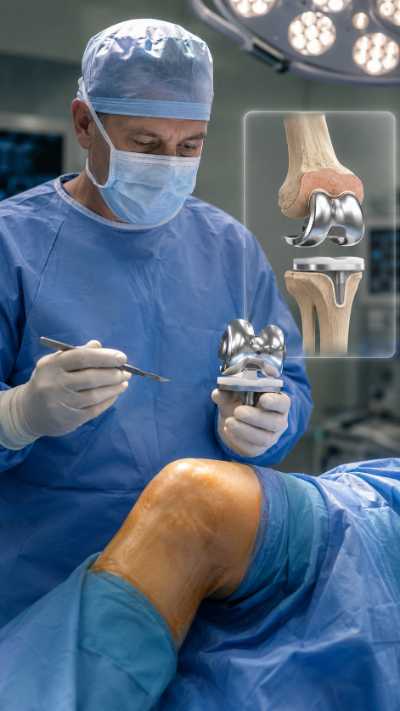
And for some people, knee replacement may be the right answer. But it is still a major, irreversible decision. So before going down that path, I think it is fair to ask whether you have tried the serious alternatives first.
Not for three days.
Properly.
Have You Actually Tried the Basics Properly?
A lot of people say, “I’ve tried everything.”
I get it. When you are in pain, it feels that way.
But sometimes “everything” really means a few painkillers, a few stretches, a couple of physio visits, some rest, and then frustration when the pain comes back.
That is not really trying everything.
A better question is:
Have you followed a structured plan long enough to know whether it helps?
That could include strengthening, glute activation, alignment work, inflammation reduction, low-impact movement, support tools if needed, and home therapy options.
With old injured knees, there usually is not one magic switch. It is more often a stack of things that either adds pressure to the joint or helps take pressure away.
Glute Activation, Strength, and Alignment
This is one of the biggest areas people miss.
When your knee hurts, it is natural to focus only on the knee. But the knee does not work on its own. It sits between your foot, ankle, hip, glutes, core, and the way your whole body moves.
One of the biggest things I would look at before knee replacement is whether your glutes are actually doing their job.
And I do not just mean the big main glute muscle, the gluteus maximus.
The muscles that often get overlooked are the gluteus medius and gluteus minimus. These smaller side-hip muscles help stabilise the pelvis, control the hip, and stop everything collapsing inward when you walk, squat, climb stairs, or get up from a chair.
If those muscles are weak or underactive, the knee often cops the punishment.
That can mean more twisting, more pressure, poorer tracking, and more stress through the joint.
So before only thinking, “I have a bad knee,” it is worth asking:
Are my glutes firing properly?
Are my hips helping control the movement?
Is my knee collapsing inward?
Am I dumping pressure into the joint because other muscles are not doing their job?
Glute activation is not the only answer, but it is a big part of the picture.
You still need strength and control through the quads, hamstrings, calves, hips, core, feet, and ankles. All of that helps with balance, stability, alignment, and reducing unnecessary stress through the knee.
This is where a good physio, trainer, or movement specialist can be useful.
Not just someone handing you a generic sheet of exercises, but someone who actually watches how you move.
Because if your glutes are asleep and your alignment is poor, your knee may be taking pressure it was never meant to handle on its own.
Weight, Inflammation, and Joint Load
This part can be uncomfortable, but it matters.
Every extra kilo of body weight can add more load through the knees. That is not about shame. It is mechanics.
If your knee is already irritated, inflamed, arthritic, or damaged, extra load can make every step harder.
But I do not think this conversation should only be about weight.
Inflammation matters too.
For me, changing how I ate was not just about body fat. It was about energy, inflammation, pain, and whether my body constantly felt like it was fighting itself.
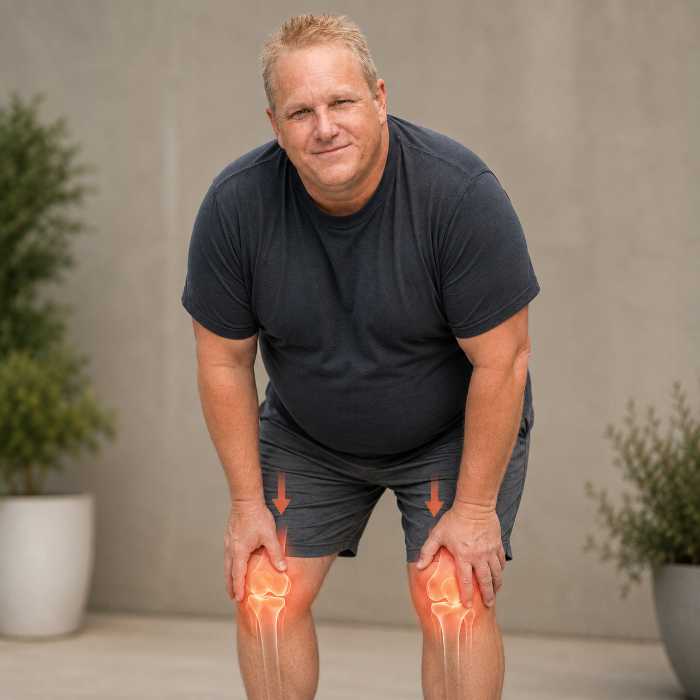
Low carb, keto, carnivore, intermittent fasting, and improving my metabolic health were all part of that journey.
I am not saying food magically rebuilds a damaged knee.
But your body’s internal environment matters.
If you can reduce inflammation, improve metabolic health, and reduce the load going through the joint, that may give your knee a better chance to settle down.
Low-Impact Movement Without Thrashing Your Joints
When your knee hurts, it is tempting to stop moving.
Sometimes you need to back off during a flare-up. But stopping completely for months can make the knee weaker, stiffer, and less stable.
The answer is not to smash yourself either.
The answer is to move without thrashing the joint.
That might mean walking within tolerance, swimming, cycling, water exercise, gentle mobility, or controlled strengthening.
Nothing heroic.
Just consistent movement your knee can recover from.
The goal is simple: keep function, build strength, and avoid creating the next flare-up.
📢 Shareable Insight
“Your knee does not need punishment to prove you are trying. It needs the right amount of movement, enough recovery, and a plan that does not create the next flare-up.”
👉 Click to Tweet
Braces, Shoes, Insoles, and Walking Aids
Braces, supportive shoes, insoles, orthotics, and walking aids are often mentioned as knee replacement alternatives.
For some people, they may help.
A brace might give support.
Better shoes may reduce irritation.
Insoles may help some people with pressure or alignment.
A cane may help if pain is severe or confidence is low.
I personally have not gone far down this route.
The only time I used a cane was when I had an injury and genuinely needed the support.
For me, I would rather focus on alignment, glute activation, strength, and getting the body moving properly.
But if a support tool helps you stay mobile while you work on the bigger problem, it may have a place.
Just do not mistake support for a full solution.
Pain Relief, Creams, and Injections
Pain relief, anti-inflammatory medication, creams, gels, steroid injections, and other joint injections are commonly discussed before knee replacement.
That is a conversation to have with a qualified professional.
Personally, I avoid pharmaceutical options wherever I can. My trust in the industry and the medical profession is not what it used to be.
I will leave that there.
My bigger concern is this:
If something only blocks the pain, but you keep moving badly, loading the joint badly, and ignoring inflammation, are you fixing the problem?
Or are you just turning down the alarm?
That does not mean nobody should use these options. It means I personally wanted to focus more on helping my body work better, not only masking the warning signs.
📢 Shareable Insight
“If pain relief only turns down the alarm while you keep loading the joint the same way, you may feel better without actually fixing the problem.”
👉 Click to Tweet
Regenerative Medicine and Expensive Promises
When people search for knee replacement alternatives, they often come across stem cells, PRP, hyaluronic acid, cartilage regeneration, and other injection-style treatments.
Some may help some people.
Some are expensive.
Many are debated.
Some are marketed harder than the evidence supports.
My view is simple.
Before spending big money chasing regeneration, I would first ask whether I have given my body the best chance to repair and recover naturally.
Have I addressed inflammation?
Movement?
Strength?
Circulation?
Nutrition?
Sleep?
Recovery?
And if I was considering a treatment, I would ask:
What evidence supports it for my exact knee problem?
What are the risks?
The cost?
What happens if it does not work?
Am I still likely to need surgery later?
Hope is powerful.
But expensive hope without clarity can become a trap.
Home Therapy Devices and Frequency Therapy
This is the category I had not properly explored for most of my life.
Things you can use consistently at home, not just when you are desperate.
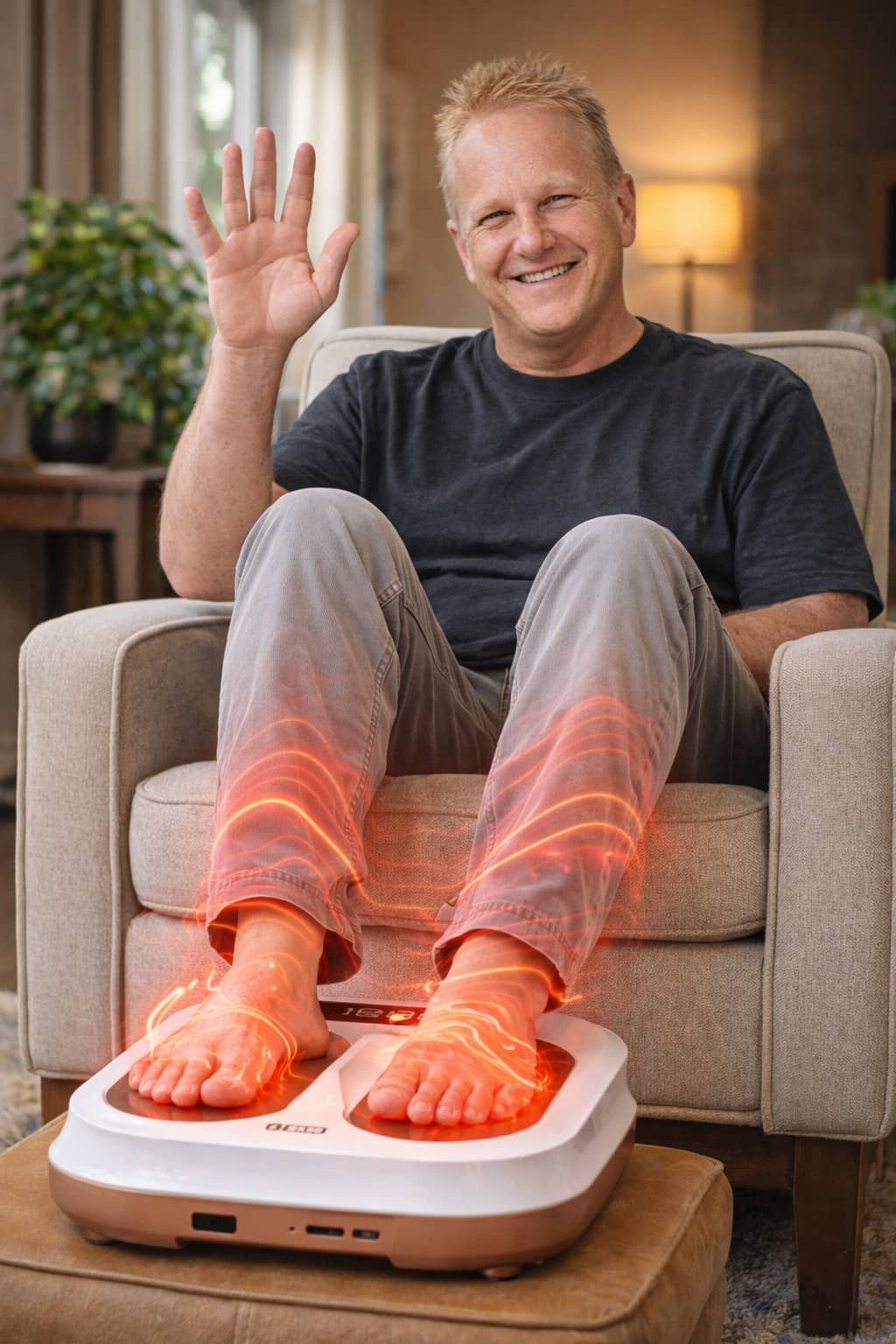
This is what led me toward frequency therapy, including PEMF, terahertz, and red light therapy.
I was not looking for a miracle.
I was looking for something practical.
Something I could use regularly. Something that might help calm things down enough to move better, recover better, and keep working on the bigger picture.
That bigger picture still matters.
Alignment.
Glute activation.
Strength.
Inflammation.
Low-impact movement.
Recovery.
Consistency.
A device is not the whole plan.
But it can be part of the plan.
That is what led me to the OlyLife TERA P90.
For me, it made more sense to explore what I could do daily at home before simply waiting until the knee got bad enough to be cut open.
I am not calling frequency therapy a knee replacement cure.
But I do think home therapy is one of the most overlooked categories when people are asking what to try before knee surgery.

When Knee Replacement May Still Be the Answer
Sometimes knee replacement may still be the right answer.
If the pain is severe, mobility is badly reduced, sleep is affected, the joint is badly damaged, and conservative options have been tried properly, surgery may be what gives someone their life back.
I am not anti-surgery.
But I was not ready to treat surgery as step one.
I wanted to know I had tried the serious alternatives first, so I would not look back later and wonder whether I jumped too soon.
My Personal Checklist Before Knee Replacement
Before accepting knee replacement as inevitable, I would personally ask:
What does the scan actually show?
Is there no cartilage left, or is there a specific damaged spot that bites from time to time?
Have I had a second opinion?
Is the pain coming from the joint itself, poor movement, inflammation, weakness, or a combination?
Have I done proper strengthening?
Are my glutes actually activating?
Have I worked on alignment and movement patterns?
Have I reduced inflammation and joint load?
Did I address weight and metabolic health if needed?
Have I tried low-impact movement consistently?
Have I considered braces, supports, or walking aids if I genuinely need them?
Weighed up the pros and cons of injections or regenerative options?
Have I tried home therapy tools?
Is my quality of life still bad enough that surgery makes sense?
That is the filter I wish more people had before being pushed toward surgery as the only path.
Maybe knee replacement is the right answer.
But maybe there are still things worth trying first.
Final Thoughts
Knee replacement alternatives are not about pretending surgery is always avoidable.
They are about asking better questions before making a permanent decision.
For me, that meant looking at glute activation, alignment, strength, inflammation, joint load, movement, and home therapy options before accepting that surgery was the only way forward.
If you want the full personal story behind why something had to change for me after decades of knee pain, watch my video:
Something’s Gotta Change — Why I Chose OlyLife TERA P90 After Decades of Knee Pain
And if you want to talk through the PEMF, terahertz, red light therapy, or OlyLife device options I personally looked at, you can book a free appointment here:

Frequently Asked Questions
What are knee replacement alternatives?
Knee replacement alternatives may include strengthening, glute activation, inflammation management, low-impact movement, braces, insoles, walking aids, pain relief options, injections, regenerative medicine, and home therapy devices.
Can knee replacement be avoided completely?
Sometimes knee replacement may be delayed or avoided, but not always. If the joint is severely damaged and quality of life is badly affected, surgery may still be the right option.
What should I try before knee replacement surgery?
Before knee replacement surgery, I would look at a second opinion, proper strengthening, glute activation, alignment, inflammation, metabolic health, low-impact movement, support tools if needed, and home therapy options.
Why are glutes important for knee pain?
The glutes, especially the gluteus medius and gluteus minimus, help stabilise the hips and pelvis. If they are weak or underactive, the knee may take extra pressure during walking, stairs, squatting, and standing.
Can weak glutes cause knee pain?
Weak or underactive glutes may contribute to poor knee tracking, collapsing inward, and extra stress through the joint. They may not be the only cause, but they can be an important part of the problem.
Is walking good before knee replacement?
Walking may help some people maintain movement and function, but it needs to stay within tolerance. If walking creates swelling, sharp pain, or a major flare-up, it may need to be adjusted.
Is cycling good for bad knees?
Cycling can be a useful low-impact option for some people because it keeps the joint moving without the same impact as running. Seat height, resistance, and pain response all matter.
Are knee braces worth trying?
Knee braces may help some people feel more supported or reduce pressure, especially during activity. I personally see them as support tools, not the main solution.
Do insoles help knee pain?
Insoles may help some people if foot mechanics or pressure patterns are contributing to knee stress. They are not a guaranteed fix, but they may be worth discussing with a professional.
Are steroid injections a knee replacement alternative?
Steroid injections may be used to reduce pain and swelling for some people. They are a medical option to discuss with a qualified professional, especially if you are weighing up surgery.
What is regenerative medicine for knees?
Regenerative options may include PRP, stem cell-style treatments, hyaluronic acid, or other injection-based therapies. These can be expensive, and results may vary, so it is worth asking hard questions before spending money.
Can PEMF therapy help knee pain?
PEMF therapy is a home therapy option some people explore for pain, stiffness, circulation, and recovery support. I do not see it as a knee replacement cure, but I do see it as one possible tool in a bigger plan.
What is terahertz therapy?
Terahertz therapy is a frequency-based therapy option used in some wellness devices. I personally looked at it as part of a broader home therapy approach alongside PEMF and red light therapy.
Is OlyLife TERA P90 a knee replacement alternative?
I would not call the OlyLife TERA P90 a direct replacement for surgery. For me, it is a home therapy device I use as part of a broader plan that includes movement, inflammation reduction, glute activation, and recovery.
When is knee replacement still the right answer?
Knee replacement may still be the right answer if pain is severe, mobility is badly reduced, sleep is affected, the joint is badly damaged, and serious non-surgical options have not helped enough.
Should I talk to a doctor before trying knee replacement alternatives?
Yes. This post is personal experience and general information only. Always speak with your doctor, surgeon, physiotherapist, or qualified healthcare professional before making decisions about surgery, treatment, exercise, or medical devices.


