
How to Reduce Knee Pain at Home: Beyond Painkillers.
Reducing knee pain at home is not just about taking painkillers, rubbing on a cream, and hoping your knee magically behaves tomorrow. Pain relief has its place, but if the same knee keeps flaring up, locking up, aching, or screaming every time you move, it may be time to look at the bigger picture.
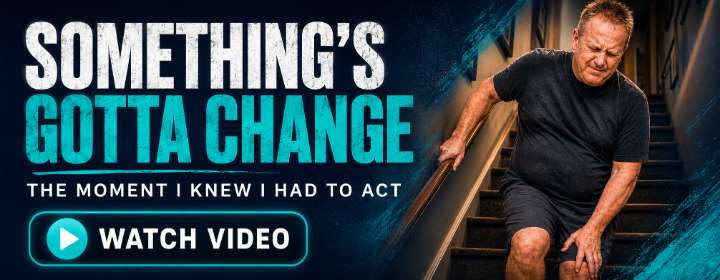
If you’re searching for how to reduce knee pain at home, chances are you’re looking for more than another reminder to take painkillers and rest. Pain relief has its place. So does rest. But if the same knee keeps aching, flaring, swelling, locking up, or limiting your life, then it may be time to look at the bigger picture.
I’m not anti-painkiller. I’m anti pretending painkillers are the whole plan.
That matters because knee pain is rarely just about the knee. The knee gets blamed because that is where the pain shows up, but the stress can come from old injuries, weak muscles, poor movement, extra body weight, inflammation, food choices, footwear, or simply doing too much of the wrong thing for too long.
I know that from experience.
I had an ACL reconstruction roughly 30 years ago, multiple arthroscopies, years of knee and ankle pain, and eventually a doctor talking about knee replacement. I’m not pretending I grew a brand-new knee. I’m saying I stopped treating knee pain like a random enemy and started looking at the system around it.
That is what this article is about.
Not magic.
Not “never take a tablet.”
Nor “ignore your doctor.”
Just a more useful way to think about reducing knee pain at home without relying only on painkillers.
How to Reduce Knee Pain at Home Without Just Masking It
Painkillers can help. They may calm pain enough to sleep, move, work, or get through a rough day. In some cases, that is exactly what someone needs.
The problem starts when painkillers become the whole strategy.
If your knee keeps flaring up every time you walk, climb stairs, get out of a chair, or try to exercise, the pain is probably telling you something. Killing the pain signal may help you cope, but it does not automatically fix the reason the knee keeps complaining.
That is the shift I had to make.
For years, I looked at knee pain as something that happened because my knee was damaged. And yes, old injuries matter. Surgery matters. Wear and tear matters. But over time, I started to see that my knee was also reacting to load, movement, inflammation, weight, and recovery.
Painkillers can turn the volume down.
But if the same knee keeps screaming every time you move, the bigger question is: why is it screaming?
📢 Shareable Insight
“Painkillers can turn the volume down, but they do not always fix the reason your knee keeps screaming.”
👉 Click to Tweet
First, Know What Kind of Knee Pain You Are Dealing With
Not all knee pain belongs in the same bucket.
A dull ache after activity is different from sharp pain after a twist. Stiffness after sitting is different from a knee that locks or gives way. Swelling after a long walk is different from redness, heat, fever, or sudden severe pain.
That matters because home knee pain relief makes sense for some situations, but not all of them.
If your knee is badly swollen, hot, red, unstable, locked, or you cannot put weight on it, that is not the time to guess your way through it at home. The same goes for sudden trauma, worsening pain, calf swelling, fever, or pain that feels completely different from your usual pattern.
Get it checked.
But if you are dealing with ongoing knee pain, arthritis-type stiffness, old injury discomfort, joint pressure, aching after movement, or flare-ups that come and go, then a home-based plan may help you think more clearly.
The goal is not to diagnose yourself from a blog post.
The goal is to stop treating every knee flare as a random disaster.
Use Painkillers as a Tool, Not the Whole Plan
There is nothing clever about suffering for no reason.
If you need pain relief, use the medical advice that suits your situation. Talk to your doctor or pharmacist if you are unsure, especially if you already take medication, have stomach issues, kidney problems, blood pressure concerns, or anything else that makes painkillers less straightforward.
But from a bigger-picture view, painkillers should be a tool, not the plan.
A tool helps you function.
A plan asks better questions.
Why does the knee hurt more after certain foods?
Why does walking help one day and flare it the next?
Does going downstairs hurt more than walking on flat ground?
Why does the knee feel worse when your weight creeps up?
Why does one shoe feel fine and another one makes you walk like a wounded duck?
That is where things get more useful.

Because once you start asking those questions, you stop chasing pain only after it has already flared. You start looking at what keeps loading, irritating, weakening, or inflaming the joint in the first place.
Strengthen the Muscles That Support the Knee
The knee does not work alone.
It sits between the hip and the foot, so it often cops the blame for problems that start somewhere else. Weak hips, glutes, quads, hamstrings, ankles, and poor balance can all change how force travels through the leg, leaving the knee as the poor bastard in the middle taking the punishment.
That does not mean you need to smash yourself with a brutal gym program.
In fact, if your knee already hurts, going too hard too soon is one of the fastest ways to stir the hornet’s nest.
A better starting point is usually gentle, controlled strengthening. Think of movements that help your legs work better, not workouts that prove how tough you are.
For many people, that means slowly rebuilding strength around the quads, hamstrings, glutes, hips, calves, and ankles. Simple movements can be enough at first. Controlled sit-to-stand practice, gentle step-ups, glute bridges, supported calf raises, and careful balance work may all have a place, depending on your knee and your current ability.
The key word is controlled.
Not rushed.
Nor heroic.
Not “I saw someone on YouTube do this, so I’ll do five sets and wreck myself.”
When the muscles around the knee get stronger, the joint has better support. When your hips and ankles move better, the knee does not have to compensate as much. Once your balance improves, every step can become a little less sloppy.
That is not exciting advice, but it matters.
Boring consistency beats dramatic flare-ups.
Not the dose you used to handle 20 years ago.
Or the dose some fitness influencer thinks you should do before breakfast.
The goal is to move enough to help the joint without making it angry for the next three days.
For me, this was a big lesson. I could not just think, “movement is good,” and then assume every form of movement would help. Some movement helped. Some made things worse. Stairs, long walks, uneven ground, and awkward twisting could all change the result.
So the question became less about whether movement was good or bad.
The better question was: what movement can I repeat without paying for it tomorrow?
That is where progress starts.
📢 Shareable Insight
“The knee often gets blamed, but sometimes it is just the poor bastard in the middle taking punishment from weak hips, lazy glutes, stiff ankles, and too much body weight.”
👉 Click to Tweet
Reduce the Load Going Through the Knee
Weight loss is usually talked about like it is only about belly fat, clothes, or looking better in photos.
With bad knees, it becomes more practical than that.
It becomes a pressure problem.
Every step sends force through the knees. The more body weight you carry, the more load your knees have to deal with every day. That does not mean weight is the only reason someone has knee pain. Plenty of lighter people have bad knees, and plenty of heavier people still move well.
But if your knees already hurt, reducing load can matter.
I used to think of weight loss as a belly problem. With bad knees, it becomes a knee pressure problem.
That is one reason my own health journey changed how I looked at pain. When I moved away from sugar and refined carbs, then into low-carb, keto, carnivore, intermittent fasting, and longer fasts, I was not just chasing a number on the scales. I was trying to calm the whole system down.
My knees were part of that.
My ankles were part of that.
Energy and my inflammation was part of that.
That is why I see weight loss and metabolic health as part of a knee pain conversation. Not because every knee problem disappears when someone loses weight. That is too simple. But because less joint load and lower inflammation can give the knees a better chance.
If you are over 40 and your knees are already complaining, weight loss stops being cosmetic.
It becomes mechanical.
Calm Inflammation Instead of Only Fighting Pain
Pain and inflammation are not the same thing, but they often travel together.
When inflammation is high, pain can feel louder. Joints can feel stiffer. Old injuries can seem more noticeable. Recovery can feel slower.
This is where food becomes worth paying attention to.
I am not saying everyone needs to eat the way I eat. I am not saying one food causes knee pain in every person. But I do think many people underestimate how much food can affect joint pain, skin, energy, and inflammation.
For me, the knee pain was never just a knee story. It was tied into inflammation, food, weight, old injuries, and what my body was tolerating at the time.
I have seen my own body react to things that other people might dismiss as nothing.
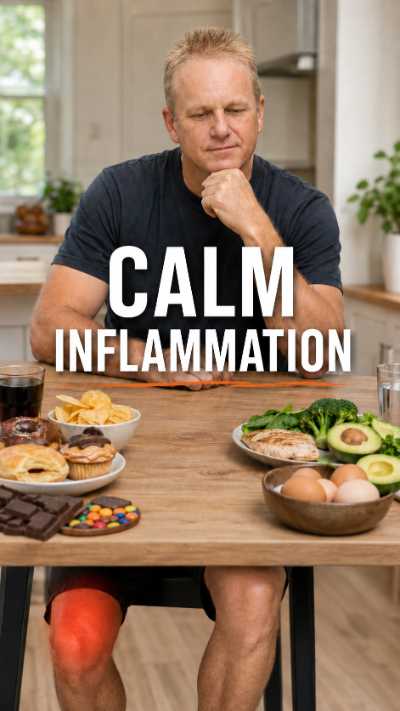
A small amount of Hershey’s dark chocolate triggered a plantar pustular psoriasis flare for me. Almond milk, which sounds harmless enough, brought knee pain back when I reintroduced it. That does not mean chocolate or almond milk will do the same thing to everyone, but it taught me something important.
My body gives feedback.
Sometimes loudly.
That is why I pay attention to patterns. If knee pain flares after certain foods, poor sleep, too much sugar, alcohol, or a week of bad choices, I do not write it off as random anymore.
I look for the connection.
You do not need to become obsessive. But it can help to notice what your body keeps telling you.
Use Heat, Cold, Bracing, and Simple Support Wisely
Some home knee pain tools are simple, cheap, and useful.
Cold may help when the knee feels irritated, swollen, or hot after activity. Heat may feel better when stiffness is the main problem. A knee sleeve or brace can give support when the joint feels vulnerable. Better footwear can change how your knee feels during the day.
A walking stick or support is not a moral failure either.
If it helps you move safely while the knee calms down, use the tool. Pride does not rebuild cartilage. Limping badly for weeks because you refuse support is not a victory.
Just keep these tools in their place.
They can help you manage symptoms.
They do not replace strength, load management, movement quality, inflammation control, or proper medical care when something is clearly wrong.
Use support.
Do not confuse support with the whole solution.
Where Frequency Therapy Fits Into Knee Pain at Home
This is where I started looking beyond painkillers, creams, and waiting for the next flare-up.
Frequency therapy is not where I would start if someone has a new injury, a locked knee, a major swelling problem, or something that needs proper medical assessment. But for ongoing pain, old injuries, stiffness, recovery support, and home-based consistency, I do think it is worth discussing.
This is the space where PEMF therapy, terahertz therapy, and red light therapy come into the conversation.
I do not position these as magic cures. That is not how I talk about them, and it is not how I use them.
For me, frequency therapy sits inside a bigger plan. I still care about food. I still care about weight. My movement. I still care about not doing stupid things that flare my knee up for days.
But home therapy gave me another tool.
The device I use is a foot-based PEMF and terahertz-style unit, and I also use handheld red-light support. My usual approach is built around 20-minute sessions, spacing things apart, and paying attention to how my body responds. I have used it in the context of knee pain, ankle pain, and sciatica, not as a miracle button, but as part of a recovery routine.
That distinction matters.
If someone expects one session to undo 30 years of injury, weight, inflammation, and poor movement, they will probably be disappointed.
But if someone sees it as one support tool inside a bigger knee pain plan, then the conversation becomes much more realistic.
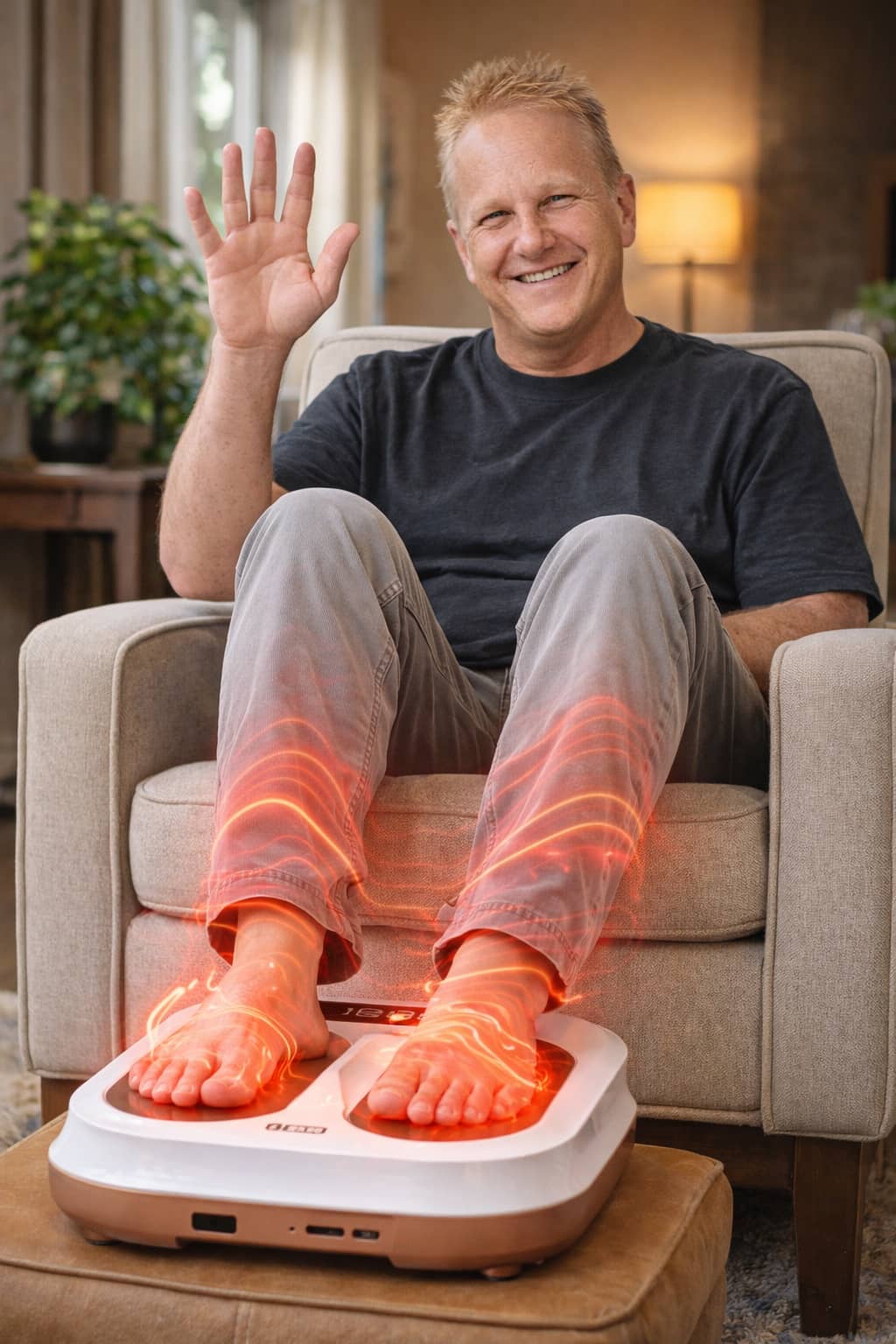
That is why I talk about frequency therapy the way I do.
Not hype.
Not miracles.
Just another way to support the body while you work on the things that keep stressing the joint.
My Own Knee Pain Lesson
My knee pain story did not start last week.
It goes back decades.
ACL reconstruction. Multiple arthroscopies. Years of knee and ankle pain. Sharp flare-ups. The kind of pain that makes you think before standing up, walking too far, going downstairs, or doing anything that might set it off.
Eventually, a doctor talked about knee replacement.
Now, I am not anti-surgery. Sometimes surgery is the right answer. Some people wait too long and suffer for no reason. I get that.
But I also did not want to rush toward an irreversible decision without asking what else I could improve first.
Could I reduce inflammation?
Could I reduce load?
Is it possible to move better?
Could I strengthen the support system around the knee?
Could I stop relying on anti-inflammatories as the main answer?
AND Could I use home therapy to support recovery and comfort?
Those questions changed the way I looked at the problem.

I stopped seeing knee pain as just a damaged-joint issue and started seeing it as a whole-body, whole-lifestyle, whole-system issue.
That does not mean every day is perfect. It does not mean I never get pain. It does not mean I am pretending to have the knees of an 18-year-old footballer.
I’m not pretending I grew a brand-new knee.
I’m saying the knee started making more sense when I stopped treating pain as the only issue.
That is the lesson I want people to take from this.
If your knee hurts, do not just ask, “What can I take?”
Ask, “What is loading this knee, irritating it, weakening it, inflaming it, or stopping it from recovering?”
That is a much better question.
When Home Knee Pain Relief Is Not Enough
Home care has limits.
If your knee pain came from a sudden injury, or the knee is badly swollen, hot, red, unstable, locked, or getting worse, get medical help. If you cannot bear weight, if you have fever, if the calf is swollen, or if the pain feels unusual and severe, do not sit there trying to tough it out.
That is not being brave.
That is gambling.
Home strategies make more sense when you are dealing with manageable, ongoing, familiar knee pain and you want to improve the way your body supports the joint.
They do not replace proper assessment when something is clearly wrong.
The goal is to take responsibility, not play doctor.
Final Thoughts: Build a Knee Pain Plan, Not a Painkiller Habit
Painkillers can help you get through the day, but they should not be the only answer you ever reach for.
If you want to reduce knee pain at home, think bigger.
Look at movement.
Look at strength.
Assess your hips, glutes, ankles, and feet.
Look at weight and joint load.
Look at inflammation.
Watch for food triggers.
Look at recovery.
Look at support tools.
And if it fits your situation, look at frequency therapy as one part of a bigger home recovery plan.
The point is not to find one magic thing.
The point is to stop treating knee pain like it exists in isolation.
For me, that meant looking at old injuries, metabolic health, inflammation, movement, weight, and home therapy together. That approach made far more sense than just waiting for the next flare-up and reaching for another short-term fix.
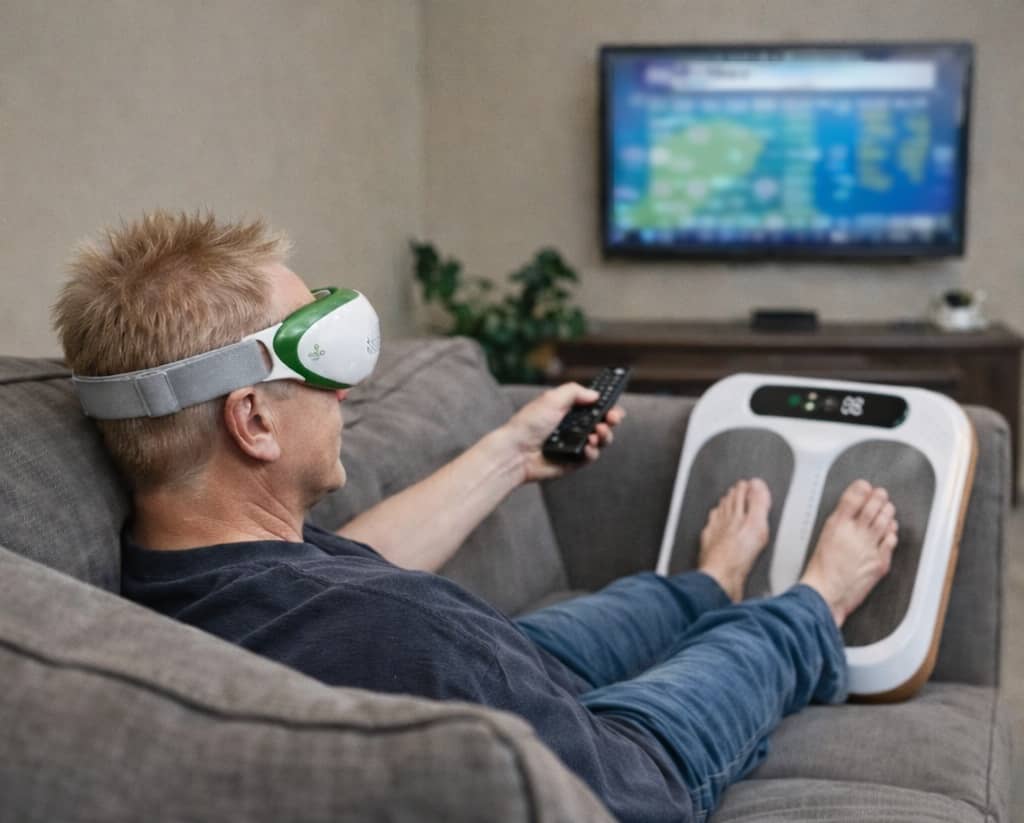
If you want help working out whether frequency therapy could fit into your knee pain and recovery plan, you can message me or book a free call. I will not tell you it is magic, and I will not pretend every knee problem is the same.
But I can help you think through the options.
Frequently Asked Questions
What is the best way to reduce knee pain at home?
The best home approach depends on the cause of the knee pain, but a useful starting point is to think beyond painkillers. Look at gentle movement, strength, joint load, inflammation, footwear, heat or cold, and recovery support.
If the pain is severe, sudden, swollen, unstable, or getting worse, get it checked rather than trying to manage it alone.
Can knee pain go away without medication?
Sometimes knee pain can improve without relying on medication, especially when the problem is linked to joint load, stiffness, weakness, overuse, or inflammation. Movement, strengthening, weight loss, food changes, better footwear, and recovery support may all help.
Medication still has a place for some people, but it does not have to be the only tool.
Should I rest or exercise with knee pain?
Both can be useful, depending on the situation. Rest may help during an acute flare-up, but too much rest can make the knee stiffer and the surrounding muscles weaker.
The better question is usually: what movement can your knee tolerate without flaring badly afterward?
What exercises help knee pain at home?
Gentle strengthening and control exercises may help many people, especially movements that support the quads, hamstrings, glutes, hips, calves, and ankles. Examples may include controlled sit-to-stands, glute bridges, supported calf raises, careful step-ups, and balance work.
The right choice depends on your knee, your pain level, and your current ability. Start easier than you think you need to.
Is walking good for knee pain?
Walking can help some knee pain, especially if stiffness and inactivity are part of the problem. The mistake is assuming more walking is always better.
Short, manageable walks on flat ground may help, while long walks, hills, stairs, or uneven surfaces may flare the knee. Let your knee’s next-day response guide you.
Why does my knee hurt going downstairs?
Going downstairs can load the knee differently from walking on flat ground. It often demands more control from the quads, hips, glutes, and ankles.
If the support system around the knee is weak or poorly controlled, the knee can take more stress than it likes. That is one reason strengthening and movement quality matter.
Can losing weight reduce knee pain?
Losing weight may reduce knee pain for some people because it lowers the load going through the joint. This is especially relevant for people with arthritis-type knee pain or pain that gets worse with walking, stairs, or long periods on their feet.
It is not about vanity. With sore knees, body weight can become a pressure issue.
Does inflammation make knee pain worse?
Inflammation can make pain feel louder and joints feel stiffer or more sensitive. Some people notice knee pain changes with food, sleep, stress, alcohol, sugar, or processed carbohydrates.
Not everyone reacts the same way, but it is worth paying attention to patterns instead of assuming every flare-up is random.
Is heat or ice better for knee pain?
Cold may help when the knee feels swollen, hot, irritated, or inflamed after activity. Heat may feel better when the main problem is stiffness or tightness.
Some people respond better to one than the other. Use what helps, but do not rely on heat or ice as the whole plan if the same pain keeps returning.
Do knee braces help knee pain?
A knee brace or sleeve may help some people feel more supported, especially during walking, light activity, or a flare-up. It can be a useful tool, but it should not become a substitute for improving strength, movement, load, and recovery.
If a brace is the only reason you can move without pain, that is a sign to look deeper.
Can food affect knee pain?
Food may affect knee pain in some people, especially if it influences inflammation, weight, blood sugar, or fluid retention. Sugar, refined carbs, alcohol, and certain trigger foods may make some people feel worse.
The only way to know is to pay attention to your own body. A food diary or short elimination period can reveal patterns you might otherwise miss.
What is frequency therapy for knee pain?
Frequency therapy is a broad term often used for technologies such as PEMF therapy, terahertz therapy, and red light therapy. These approaches are usually discussed in the context of circulation, recovery, comfort, and home wellness support.
I would not call them a cure for knee pain. I see them as possible support tools inside a bigger plan that also includes movement, weight, inflammation, and strength.
Can PEMF therapy help knee pain?
Some people use PEMF therapy as part of a home pain and recovery routine. The idea is not to replace medical care, but to support the body while also working on the bigger issues that may keep stressing the knee.
If you are considering PEMF therapy, look at your whole situation first. Old injuries, arthritis, weight, inflammation, strength, and daily habits all matter.
When should I see a doctor for knee pain?
See a doctor or qualified health professional if the knee is badly swollen, red, hot, unstable, locked, or painful after a sudden injury. Also get help if you cannot bear weight, have fever, calf swelling, worsening pain, or symptoms that feel unusual for you.
Home care is useful, but it has limits. Do not ignore warning signs.
What is the biggest mistake people make with knee pain at home?
The biggest mistake is treating pain relief as the whole solution. Painkillers, creams, heat, ice, and braces can help, but they may not fix the reason the knee keeps flaring.
A better plan looks at movement, strength, load, inflammation, recovery, and the whole chain around the knee.


