
Stop Feeding the Hormone That Keeps You Fat
If you read my last post, This ONE Thing Stores More Fat Than Sugar Ever Could, you already know the villain in our story: insulin—the hormone that keeps you fat.
That little hormone your pancreas pumps out isn’t evil on its own—it’s doing its job. But in today’s food environment, insulin often gets overworked, overstimulated, and, frankly, abused. The result? Fat storage mode gets switched on 24/7, your energy tanks mid-afternoon, you always feel hungry and the belly fat you’ve been trying to lose refuses to budge.
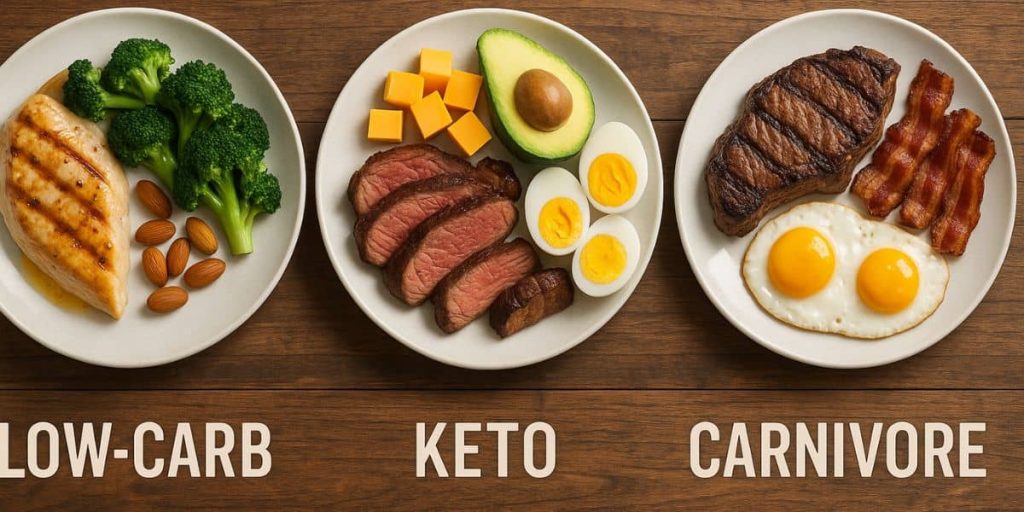
This post is about how to fight back—with your fork. And not just with any diet, but with a progressive, strategic shift that starts with low carb, moves into keto, and can finish with carnivore for maximum fat-burning power. I’ll share stories, examples, and actionable tips for each stage.
How We Accidentally Feed the Hormone That Keeps You Fat All Day
Imagine your body as a hybrid car with two fuel tanks—one for sugar (glucose) and one for fat. Insulin, the hormone that keeps you fat when elevated, is the switch that determines which fuel tank you run on. Every time you eat carbs, especially refined carbs or sugar, insulin levels rise. This flips your body into sugar-burning mode and shuts off fat burning.
Here’s the problem: Most people eat in a way that spikes insulin from morning till night. Breakfast cereal? Insulin spike. Mid-morning muffin? Another spike. Pasta for lunch? Spike. Afternoon latte? Spike. Dinner with bread? Spike. Dessert? You guessed it—spike.
And it’s not just junk food. Even “healthy” foods like oatmeal, granola, or fruit smoothies can keep insulin—the hormone that keeps you fat—high. That’s why so many people are stuck—because even when they think they’re eating better, they’re still feeding insulin constantly.
My 75 Hard Wake-Up Call — Just ONE Thing
A while back, I did a challenge called 75 Hard. For 75 days straight, you follow strict rules: no cheating on your diet, work out for 45 minutes twice a day, read a book, drink plenty of water—the whole deal. I committed fully, did the work, and stuck to my carnivore-style eating. After all that effort, I lost… not even 2 kilos.
I was shattered. With the amount of work I was doing (including some 3 a.m. swims to get the second workout in) and how “clean” I thought I was eating, I should have been dropping weight fast. Eventually, I figured out the culprit: bacon pieces from a local specialty store that I’d been eating almost daily. I thought they were fine, but they were marinated in sugar and honey. That one food was enough to spike my insulin and shut off fat burning for the entire day.
When I realised this, it hit hard. I should have lost 15–20 kilos during that process, but because of one hidden source of sugar, the hormone that keeps you fat stayed elevated, and all my diet and exercise work was being cancelled out. It was a tough lesson—but one that shows how even a small daily mistake can derail fat loss.
Why the Hormone That Keeps You Fat – Blocks Fat Loss
When insulin is high, your body gets the message: store energy, don’t release it. That means the fat in your fat cells stays locked away and can’t be used for fuel. It’s like having a fully stocked pantry but putting a padlock on the door—you can see all that stored energy, but you can’t touch it.
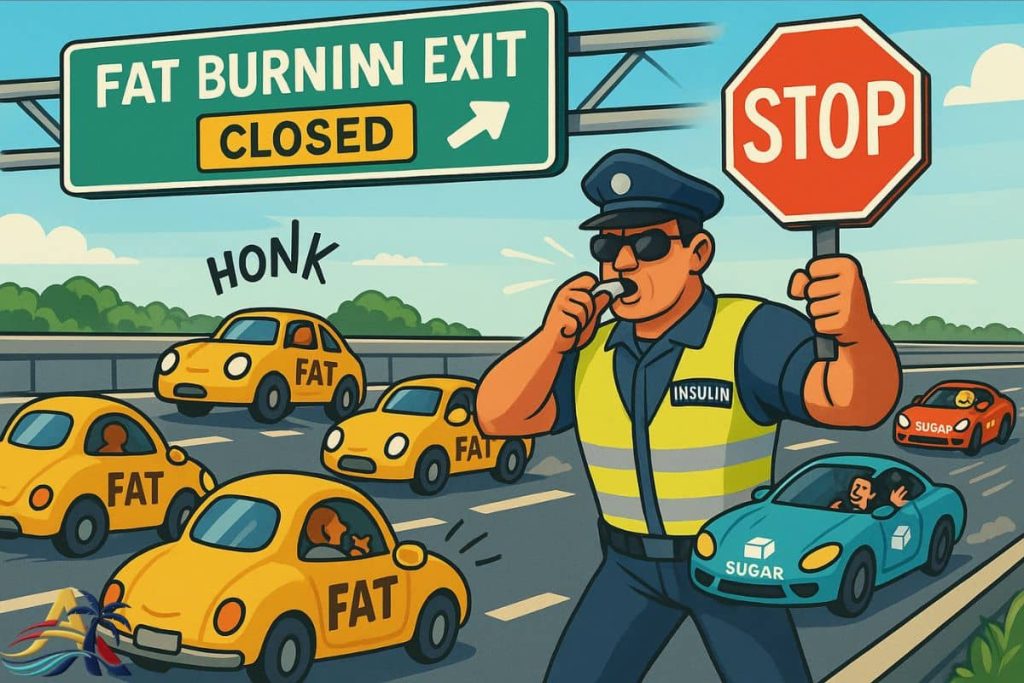
📢 Shareable Insight
“When insulin’s on duty, fat burning gets stopped in its tracks—sugar takes the fast lane while your stored fat sits in traffic.”
👉 Click to Tweet
Here’s the key problem: insulin is a storage hormone. Its job is to take the glucose from your bloodstream and either use it immediately for energy or store it for later—first as glycogen in your muscles and liver, and then as body fat. When your glycogen stores are full, excess glucose gets converted to fat. And as long as insulin is high, your body prioritises burning sugar instead of fat.
This means you could be in a calorie deficit and still not lose significant fat because your body can’t access its fat stores efficiently. On top of that, if you’re in a calorie deficit but insulin is elevated, your body senses that it can’t tap into fat stores for energy, so it responds by slowing down your metabolism to conserve energy. That means fewer calories burned throughout the day, making it even harder to lose weight despite your efforts.
Example:
Imagine someone eating 1,500 calories a day but starting the morning with a big glass of orange juice and toast, snacking on granola bars, and having pasta for dinner. Even though they’re in a calorie deficit, those meals keep insulin elevated most of the day. The body burns incoming sugar for energy, never switching to fat-burning mode, and slows metabolism to adapt to the low-calorie intake. Compare that to someone eating the same calories but from protein, healthy fats, and low-carb vegetables—their insulin stays low, metabolism stays steady, and their body taps into stored fat between meals.
Until you control the hormone that keeps you fat, you’re essentially trying to drive with the handbrake on. (Learn more about insulin resistance here.)
The Solution: Starve the Hormone That Keeps You Fat, Feed Your Fat-Burning Engine
The way to finally flip the fat-burning switch is to keep insulin low for most of the day. That doesn’t mean starving yourself. It means eating in a way that produces minimal insulin.
The fewer carbs you eat, the less of the hormone that keeps you fat your body needs to produce. And the more you keep insulin low, the more your body will naturally turn to stored fat for energy.
Stage 1 – Low Carb: The First Step
When I first tried low carb, I thought it meant “cut out sugar” and “stop eating bread.” That’s a good start, but low carb is more intentional. Here’s how to do it:
What to Eat:
- Meat, poultry, fish, eggs
- Low-carb vegetables like spinach, broccoli, cauliflower
- Healthy fats like olive oil, avocado, butter
- Nuts and seeds in moderation
What to Avoid:
- Bread, pasta, rice, cereals
- Sugary snacks and drinks
- Most fruits (stick to berries if you have them at all)
Example: My friend Lisa was a serial snacker. Crackers mid-morning, a sandwich at lunch, fruit juice in the afternoon. When she switched to low carb—omelet for breakfast, salad with grilled chicken for lunch, steak with broccoli for dinner—her afternoon energy crashes disappeared in a week.
Benefits of Stage 1:
- More stable energy
- Reduced cravings
- Initial fat loss (often 5–10 pounds in the first month) as you stop feeding the hormone that keeps you fat.
Learn more in my full low carb guide here.
Stage 2 – Keto: The Fat-Burning Accelerator
Keto takes low carb a step further by dropping daily carb intake to around 20–50 grams (net carbs). This is low enough to trigger ketosis, a metabolic state where your body primarily burns fat for fuel.
Why It Works: When carbs are that low, your liver produces ketones from fat. These ketones can fuel your brain and body, providing steady energy without the spikes and crashes caused by the hormone that keeps you fat.
What to Eat:
- All low carb foods from Stage 1
- Higher fat intake to make up calories (avocados, cheese, cream, coconut oil)
- Even fewer carbs from vegetables (focus on leafy greens)
Example: I once coached a guy named Mark who had been low carb for months but hit a plateau. We shifted him to keto—he started tracking carbs, adding more fats, and keeping protein moderate. Within weeks, he dropped another 12 pounds and said his mental clarity was better than it had been in years.
Benefits of Stage 2:
- Steady, all-day energy
- Rapid fat loss after initial adaptation
- Reduced hunger and cravings as you suppress the hormone that keeps you fat
See my full keto guide here.
Stage 3 – Carnivore: The Ultimate Insulin Control
The carnivore diet is the most extreme step—no carbs at all. Your diet is exclusively animal-based: meat, fish, eggs, and sometimes dairy.
Why It Works: With zero carbs, insulin stays rock-bottom. Your body runs on fat and ketones around the clock. This is especially effective for people with severe insulin resistance—the hormone that keeps you fat—or those who haven’t had success with other approaches.
What to Eat:
- Beef, lamb, pork, poultry, fish, eggs
- Optional dairy if tolerated
Example: Sarah, a busy mom, had tried keto but still struggled with bloating and cravings. She went full carnivore for 30 days—steak, salmon, eggs, chicken thighs—and saw not only weight loss but her skin cleared up and digestion improved dramatically.
Benefits of Stage 3:
- Maximum insulin control
- Fat loss even for “stubborn” cases
- Potential improvements in autoimmune symptoms and inflammation
Read my full carnivore guide here.
Practical Tips for Transitioning Between Stages
1. Go Gradually: Jumping straight into keto or carnivore from a high-carb diet can be rough. Reduce carbs slowly to minimise side effects like “keto flu.”
2. Stay Hydrated: Low carb diets have a diuretic effect. Add electrolytes—try my best homemade electrolyte drink—to avoid fatigue.
3. Track Your Progress: Use photos, measurements, and how you feel—not just the scale.
4. Listen to Your Body: Some thrive on carnivore, others do best at keto. Experiment and adjust.
📢 Shareable Insight
“The fewer carbs you eat—the less of the hormone that keeps you fat your body creates.”
👉 Click to Tweet
Toxic Foods You Should Absolutely Avoid at All Costs
If you’re serious about lowering the hormone that keeps you fat and unlocking your body’s natural fat-burning mode, certain foods simply have no place in your kitchen — or your body.
1. Seed Oils
Highly processed seed oils like soybean, canola, and sunflower oil are inflammatory and damaging to your metabolism. They also often come paired with carb-heavy processed foods that send your insulin soaring. Learn more in Harmful Effects of Seed Oils.
2. Refined Sugar
Sugar is one of the most potent drivers of insulin spikes — and it’s hiding in more foods than you think. Check out Toxic Effects of Sugar on Your Body for a deeper look at how it sabotages fat loss.
3. Regular Soda
A single can delivers a massive sugar load that floods your bloodstream and locks your body into fat storage mode for hours. Read Why Soda Is Bad for Your Health to see just how damaging it really is.
4. Diet Soda
Don’t be fooled — diet soda may be low in calories, but the artificial sweeteners and additives can still mess with insulin response and metabolic health. See The Hidden Dangers of Diet Soda for more.
5. Processed Packaged Junk Foods
Chips, crackers, pastries, and other ultra-processed snacks are often a toxic cocktail of refined carbs, sugars, and seed oils. They’re part of the list in Top 10 Toxic Foods Making You Fat and Sick.
5. Chocolate
A single chocolate bar triggered a severe psoriasis flare. Discover how ultra-processed chocolate ingredients can inflame the body—and what to avoid. My personal Story
Meal Timing for Extra Insulin Control
Once you’re comfortable with low carb, you can add intermittent fasting to the mix. Even a simple 12–16 hour overnight fast gives your body more time in a low-insulin state, helping you defeat the hormone that keeps you fat. Some people also see benefits from an extended fast a few times a year.
The Long-Term Payoff
The ultimate goal isn’t to be on a rigid diet forever. It’s to train your metabolism to be metabolically flexible—able to burn fat as easily as sugar. Many people find they can add some carbs back in without regaining weight, as long as they keep overall insulin spikes—the hormone that keeps you fat—low.
Think of it like winning a war. Once you’ve defeated the main enemy, you can relax your defences without losing the peace.
Your Next Step
If you’re ready to stop feeding the hormone that keeps you fat, start with Stage 1 today. Swap your breakfast cereal for eggs, trade your sandwich for a salad with protein, skip the pasta at dinner.
And if you want a step-by-step plan, recipes, and the accountability to stick with it, join my 51 Day Challenge. We’ll walk through the stages together, support you through the tough days, and celebrate every victory.
Click here to get started: https://andrewtwelftree.com/51-day-challenge/
Remember: Every bite you take is either fuelling fat storage or fat burning. Stop feeding the hormone that keeps you fat, and choose the side you want to win.


