
Why You Self-Sabotage Weight Loss (And How to Break the Cycle)
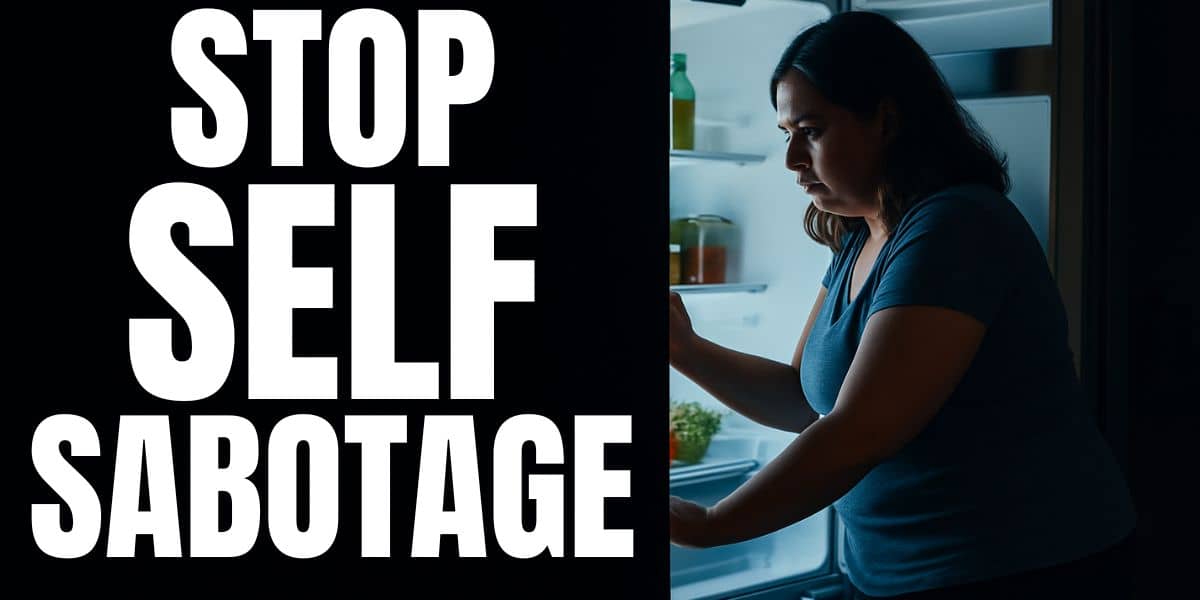
Why You Keep Getting in Your Own Way (Even When You Really Want to Lose Weight)
Have you ever been “all in” on your weight loss journey—eating clean, exercising, feeling motivated—only to find yourself just days later elbow‑deep in a bag of chips, skipping workouts, or abandoning the plan you swore you’d follow? (Self-Sabotage Weight Loss) It’s frustrating. It’s confusing. And it makes you question your discipline, your willpower, and sometimes even your worth.
But here’s the surprising truth: your lack of consistency has nothing to do with laziness or weakness. Most people aren’t failing because the plan is wrong—they’re failing because their internal programming is working against them. You don’t lose weight long‑term by forcing new habits with sheer willpower. You lose weight when you change the subconscious patterns that keep pulling you back to where you started.
This blog post will show you exactly why you self-sabotage, where those patterns really come from, and—most importantly—how to finally break the cycle for good.
The Real Meaning of Self-Sabotage
Self‑sabotage isn’t overeating, skipping the gym, or losing your routine. Those are just the symptoms. Self-sabotage is when your actions consistently move you away from what you consciously say you want.
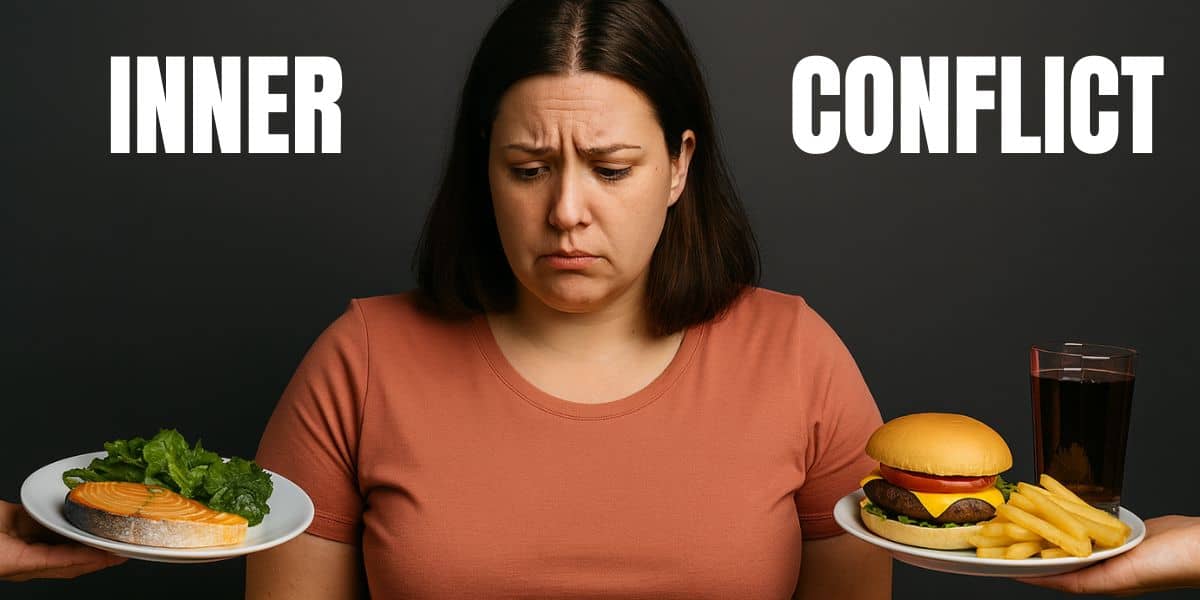
Most people WANT weight loss… but part of them also fears it.
You may consciously want a fitter, healthier body, but your subconscious is attached to what’s familiar—even if the familiar is unhealthy.
This inner conflict creates behaviors like:
- “Starting over Monday”
- Needing motivation to begin
- Eating well all day but bingeing at night
- Making progress and then suddenly slipping backward
- Giving up right before you start seeing results
If this sounds familiar, nothing is wrong with you. You’re simply trying to change your body without changing the mental, emotional, and environmental systems that control your behavior.
📢 Shareable Insight
Self‑sabotage isn’t laziness — it’s your brain defending the familiar against the unfamiliar.
👉 Click to Tweet
The Psychology Behind Self Sabotage Weight Loss
A. The Comfort Zone Problem
Your brain is wired for survival, not success. And survival favors what’s predictable—not what’s optimal.
Weight loss disrupts the familiar patterns your brain has grown comfortable with:
- Familiar routines
Example: You’ve always unwound at night with snacks and TV. When you try to replace this with a walk or stretching, it feels uncomfortable—even though you know it’s healthier—so you eventually drift back to the old routine of Self Sabotage Weight Loss. - Familiar food rewards
Example: After a stressful day, your automatic habit is grabbing something sweet. When you try to choose something healthier, your brain pushes back because it misses the dopamine hit it’s used to. - Familiar emotional coping mechanisms
Example: When loneliness or frustration hits, eating gives you temporary comfort because you’ve relied on food to soothe emotions for years. Trying to cope differently feels unfamiliar, so the brain nudges you back toward food.
Even if your old habits weren’t healthy… they were safe to your subconscious mind.
So when you try to change, your brain sends signals like:
- “This is uncomfortable.”
Example: You start prepping whole foods, but the effort feels tiring compared to takeout, so you slip back. - “This is too hard.”
Example: You try a workout routine, feel sore, and interpret it as a sign to stop, not adapt. - “Let’s stop.”
Example: The moment progress requires consistency, you find reasons to quit—work stress, social plans, or “bad timing.”
This isn’t sabotage—it’s your brain trying to protect you from perceived danger.
B. Identity Conflict
You can only rise to the level of the identity you believe you have. If your internal story doesn’t match your goals, your subconscious will pull you back to the version of yourself it recognizes.
Here’s how identity conflict shows up in real life:
- “I’m just someone who always struggles with weight.”
Example: You start losing weight, but the moment progress becomes noticeable, you feel like you’re becoming someone you don’t identify with. To “return to normal,” you unconsciously slip back into old habits. - “I’m an emotional eater—this is just who I am.”
Example: When stress hits, even if you’re committed to new habits, you default to overeating because it aligns with the identity you’ve accepted for years. - “I lose weight but always gain it back.”
Example: You make progress but sabotage yourself right before hitting a new milestone because part of you expects the weight to return—so you behave in ways that fulfill the prophecy. - “Healthy people are disciplined… I’m not like them.”
Example: You see yourself as someone who “lacks discipline,” so when you’re tired or stressed, you act in alignment with that belief rather than the person you want to become.
Identity drives action. You don’t need a new diet—you need a new internal story.
C. Emotional Safety & Food
Food is one of the most accessible and socially accepted ways people soothe themselves. Over time, your brain learns to associate eating with emotional relief, creating a powerful loop between feelings and food.
Here’s how emotional safety patterns show up:
- Food as a reward
Example: After a long, stressful day, you automatically think, “I deserve something sweet.” This reward loop becomes so ingrained that your brain links relief—not the food itself—with the act of eating. - Food as comfort
Example: When you feel lonely or overwhelmed, you gravitate toward carb-heavy or sugary foods because they provide a temporary sense of warmth, familiarity, and emotional cushioning. - Food as stress relief
Example: You feel tension building in your chest after a difficult conversation or workday. Instead of processing the emotion, you Self Sabotage Weight Loss, head straight to the pantry because eating distracts you from the discomfort. - Emotional eating becoming a learned survival mechanism
Example: If you grew up in a home where emotions weren’t expressed or supported, food may have become your safest coping tool. As an adult, whenever feelings arise, your brain automatically sends you toward eating because that’s what kept you safe before.
When food equals safety, removing emotional eating without replacing the underlying need feels threatening—so your subconscious fights back.
D. Fear of Success (or Failure)
It sounds strange, but many people subconsciously resist weight loss because change feels threatening. Here’s how each fear shows up in real life.
- Fear of attention, change, or being seen
Example: You begin losing weight and people around you start noticing. Instead of feeling proud, you feel exposed, uncomfortable, or pressured. You subconsciously slow down your progress to avoid being the center of attention. - Fear of new expectations
Example: You worry that if you become healthier, you’ll be expected to maintain a perfect lifestyle—exercise daily, eat flawlessly, never slip up. The pressure feels overwhelming, so you hold yourself back to avoid those expectations. - Fear of responsibility
Example: Part of you believes that a healthier version of you must be more outgoing, more productive, or more disciplined. Those new responsibilities feel intimidating, so you retreat into old habits where nothing is required of you. ie Self Sabotage Weight Loss - Fear of failing again
Example: You’ve lost weight before and gained it back. The shame was unbearable. Now, even when you start making progress, you pull back because failing again feels worse than not trying.
📢 Shareable Insight
You don’t change what you do — you change who you think you are.
👉 Click to Tweet
The Habits That Keep You Stuck
Self-sabotage isn’t random—it’s the direct result of repeated mental and emotional patterns. Here’s how these habits actually show up in real life.
All-or-Nothing Thinking
- “If I can’t do it perfectly, there’s no point doing it at all.”
- “One bad meal means the whole day is ruined.”
- “If I miss one workout, the whole week is blown.”
- “I’ll just start again on Monday.”
Diet Hopping
- “This plan isn’t working fast enough; I’ll switch to a new one.”
- “Maybe keto/intermittent fasting/carnivore/low-fat will fix it this time.”
- “I need something more intense so I stay motivated.”
- “If the diet doesn’t feel extreme, I assume it’s not working.”
Perfectionism → Binge Cycles
- “I ate one thing off-plan, so I might as well binge now and restart tomorrow.”
- “I broke my streak; I’ve failed.”
- “I can’t stop once I start eating something ‘bad.’”
- “I punish myself with food rules after overeating.”
Weekend Overeating
- “I was so good during the week; I deserve to relax.”
- “It’s the weekend—calories don’t count, right?”
- “I’ll enjoy myself now and tighten up on Monday.”
- “Social plans always derail me, so I just accept overeating.”
Scale Obsession
- “If the scale goes up, I’ve failed.”
- “The number isn’t moving, so what’s the point?”
- “I’ll weigh myself again—maybe it changed.”
- “My whole mood depends on what the scale says.”
Ignoring Stress, Sleep, and Hormones
- “I’ll sleep later—I need to get things done.”
- “I’m stressed, but I’ll power through.”
- “Cravings are just a discipline issue.”
- “I don’t think hormones affect me… I just need to try harder.”
How Your Environment Shapes Your Behavior
Your habits aren’t just a reflection of your willpower—they’re a reflection of the environment you live in. Your surroundings influence your choices far more than your motivation does.
Here’s how each environmental factor shapes behavior in real life:
- What you crave
Example: If sweets are visible on the counter, you’ll crave them even when you’re not hungry. But if fresh fruit or protein snacks are easier to see and reach, your cravings naturally shift. - How you eat
Example: Eating in front of the TV leads to mindless overeating because your brain never registers fullness. Eating at a table with no distractions helps you naturally stop earlier. - How consistent you are
Example: If your gym bag is buried in the closet, you’re less likely to work out. But if it’s pre-packed and by the door, consistency becomes easier without relying on motivation. - Whether you exercise
Example: If your workout space is cluttered or uninviting, you’ll avoid it. A clean, dedicated corner with a mat and dumbbells instantly boosts the likelihood of daily movement. - Whether healthy choices feel hard or easy
Example: If unhealthy snacks are within arm’s reach and healthier options require prep, you’ll default to convenience. But if your fridge is organized, meals are prepped, and junk food is out of sight, healthy choices become the path of least resistance.
Your environment can work against you—or it can silently support your goals every single day. Self Sabotage Weight Loss
Breaking the Self-Sabotage Cycle
This is the part most people skip. They try to change the behavior without changing the system. But self-sabotage ends when your mind, habits, and environment align with your goals.
Here’s how to break the cycle.
A. Awareness First: Spotting Your Patterns
You can’t change what you’re not aware of. Most self-sabotage happens on autopilot, so the first step is identifying the patterns that run beneath the surface.
Here’s how each awareness point shows up in real life:
- Emotional triggers
Example: You notice that every time you feel criticized—at work, by a partner, or even by yourself—you immediately crave something sweet. The craving isn’t about hunger; it’s about soothing the emotional sting. - Situations that lead to overeating
Example: You realize you always overeat when you get home late and feel too tired to cook. This pattern helps you plan ahead instead of repeating the same loop. - Thought patterns that justify your choices
Example: You catch yourself thinking, “It’s just one treat,” even though you’ve said that five times this week. Becoming aware of the story helps you interrupt it. - What times of day cravings occur
Example: You realize your cravings spike every night around 8 p.m.—not because you’re hungry but because this is when loneliness or boredom hits. - Whether you’re eating from hunger or emotion
Example: By pausing before you eat, you notice you’re not physically hungry—you’re stressed, anxious, or avoiding a task. That awareness alone weakens the impulse.
Awareness isn’t about judgment—it’s about collecting data you can actually use.
B. Rewriting Your Identity
Identity sits beneath your habits. When your identity is aligned with who you want to become, consistency becomes natural—not forced.
Here’s how the identity shift shows up with real examples:
- “I’m trying to lose weight” → “I’m someone who takes care of my body.”
Example: Instead of debating whether to eat a healthy lunch, you automatically choose something nourishing because that’s what someone who cares for their body does. It stops being a battle and becomes your norm. - “I always give up” → “I follow through because it’s who I am.”
Example: You miss a workout but don’t spiral. Instead of quitting, you continue the next day because following through is now part of your identity—not something you need motivation for. - “I have no discipline” → “I show up every day, regardless of motivation.”
Example: On days you’re tired or stressed, you still take a small action—like a 10‑minute walk—because disciplined people do something, not everything. - “I’m not a healthy person” → “I live like the future version of me.”
Example: You choose water over soda or cook instead of ordering takeout because you’re acting in alignment with the person you’re becoming, not the person you’ve been.
Identity makes habits automatic. When you change how you see yourself, you change how you behave. Self Sabotage Weight Loss

C. Lowering the Resistance to Action
Motivation is unreliable, but reducing friction makes follow-through easier. The goal isn’t to do more—it’s to make the next step so simple that you can’t fail.
Here’s how each low-resistance strategy looks in real life:
- 10-minute walks instead of 1-hour workouts
Example: You commit to a 10-minute interval walk: 3 minutes fast, 3 minutes slow, repeat. It feels easy, doable, and doesn’t require motivation. Because it’s simple, you actually do it—and often end up walking longer once you’re already moving. - Protein + whole food dinners instead of strict meal plans
Example: Instead of following a complicated diet or recipe, you choose a simple formula: protein (chicken, eggs, beef, fish) + a whole-food carb or veggie. One decision replaces dozens of micro-decisions, making healthy eating automatic. - Cleaning the kitchen at night to reduce morning overwhelm
Example: You spend 5 minutes clearing counters and prepping your water bottle. In the morning, the clean environment makes you want to stay on track—no chaos, no stress, no decision fatigue. - Make habits tiny so you can do them even on hard days
Example: Instead of “I’ll meditate for 20 minutes,” your rule becomes “I’ll do 1 minute of breathing before bed.” Because it’s small, you never skip it—and small habits compound into identity shifts.
When the barrier to entry is low, consistency becomes effortless.
D. Emotional Regulation Tools. Emotional Regulation Tools**
Self-sabotage often starts long before you reach for food. It begins when your nervous system becomes overwhelmed and you haven’t learned healthier ways to process those emotions. Here’s how to use emotional regulation tools with practical, real-world examples.
Breathwork (Wim Hof Method Example)
Breathwork helps reset your nervous system and reduce the stress response that triggers emotional eating.
How to use it:
Try one round of Wim Hof–style breathwork when you feel cravings coming on:
- Take 30 deep breaths (in through the nose, out through the mouth).
- Exhale fully and hold your breath as long as comfortable.
- Inhale deeply and hold for 10–15 seconds.
Why it works:
It calms the fight-or-flight state and helps you respond intentionally instead of reacting impulsively.
Example:
You come home stressed and feel the urge to binge. Instead of heading to the pantry, you sit on the couch, do one round of breathwork, and notice the craving drop from a 9/10 to a 4/10.
Journaling (Name the Feeling Exercise)
Journaling helps you externalize emotions instead of numbing them with food.
How to use it:
Open a journal and complete these prompts:
- “Right now I feel…”
- “This emotion is here because…”
- “What I actually need is…”
- “If I didn’t judge this feeling, what would it be telling me?”
Why it works:
When you give your emotions language, they lose their intensity. The brain processes them instead of storing them. May give you some insight on why you Self Sabotage Weight Loss
Example:
You write: “Right now I feel overwhelmed because my workload is huge. What I actually need is rest. Food won’t fix exhaustion.” Suddenly, the craving loses its purpose.
Nervous System Regulation (Grounding Technique)
Grounding techniques bring your mind back into your body so you can stop the autopilot behavior.
How to use it:
Try the 5-4-3-2-1 grounding method:
- Name 5 things you can see
- Name 4 things you can touch
- Name 3 things you can hear
- Name 2 things you can smell
- Name 1 thing you can taste
Why it works:
It interrupts emotional overwhelm by shifting focus to the present moment.
Example:
Instead of spiraling into stress and eating ice cream, you do grounding for 60 seconds and feel your body relax. The urgency to eat disappears.
📢 Shareable Insight
Breaking the cycle starts with awareness — once you see the pattern, you can choose a new one.
👉 Click to Tweet
Pausing Before Responding to Cravings
The goal isn’t to avoid cravings—it’s to create space between the craving and the action.
How to use it:
When a craving hits, pause for 2 minutes before acting. Use this time to ask:
- “What emotion am I actually feeling?”
- “What will eating solve for me?”
- “Will this help the person I want to become?”
Why it works:
Cravings lose power when you create intentional space.
Example:
You want cookies. You pause and realize you’re not hungry—you’re bored. You choose to go for a walk instead.
Identifying & Honoring Emotions
You don’t need to fix your emotions; you just need to feel them without using food as an escape.
How to use it: Say the emotion out loud directly:
- “I’m feeling anxious.”
- “I’m feeling lonely.”
- “I’m feeling disappointed.”
Then normalize it:
- “It’s okay for me to feel this way.”
Why it works:
What you acknowledge can be released. What you suppress stays stuck.
Example:
Instead of eating to silence sadness, you say, “I’m sad today, and that’s okay.” You sit with it for a minute, and the urge to overeat weakens.
Environment Reset
Your environment should make healthy choices the default. When you remove friction and add support, consistency becomes simple.
Here’s how each reset strategy works with real-life examples:
- Remove junk food from visible places
Example: You take chips, cookies, and sweets off the counter and put them in a high cupboard or remove them entirely. Out of sight, out of mind—your cravings drop dramatically when you aren’t visually triggered. - Prep whole foods or proteins ahead of time
Example: You cook a batch of chicken, beef, or eggs on Sunday. Now when hunger hits, you can build a healthy meal in 2 minutes instead of defaulting to takeout. - Keep water easily accessible
Example: You place a large water bottle on your desk and in your car. Because hydration is convenient, you naturally drink more and reduce unnecessary snacking. - Create a dedicated space for movement
Example: You clear a small area in your living room or bedroom and leave a yoga mat and dumbbells out. This visual cue nudges you to move your body daily without needing extra motivation. - Surround yourself with people who support your goals
Example: You tell a friend your goals, unfollow accounts that promote unhealthy habits, or join a group centered on wellness. Your social environment begins to reinforce who you want to become.
When your environment supports your identity and goals, healthy behaviors become automatic.
How Metabolic Health Impacts Self-Sabotage
Most people think they have a motivation problem—but what they really have is a blood sugar, hormone, and energy problem. When your physiology is out of balance, your behavior will be too.
Here’s how each metabolic factor drives self-sabotage, with real-life examples:
- Intense cravings
Example: You eat a high-carb breakfast (like cereal or toast), something a low‑carb approach can often stabilise, and two hours later you’re craving sugar again. This isn’t “lack of discipline”—it’s a blood sugar crash triggering a biological hunger signal. - Mood swings
Example: When your blood sugar dips, you feel irritable or anxious. You reach for quick snacks to feel better, not realizing it’s your glucose rollercoaster—not your emotions—driving the urge to eat. - Low energy
Example: You plan to work out after work, but your energy crashes every afternoon. This makes skipping workouts feel justified, not like sabotage—your body simply doesn’t have the fuel. - Stress eating
Example: Chronic stress keeps cortisol high, and supporting minerals with a homemade electrolyte drink can ease cravings while you work on stress, which increases hunger and cravings. After a stressful meeting or long day, you find yourself eating to calm your nervous system, not because you’re hungry. - Sleep disruption
Example: You sleep poorly, and the next day your hunger hormones (ghrelin) spike while your fullness hormones (leptin) drop. Suddenly everything sounds good, and stopping yourself feels impossible. - Increased hunger hormones
Example: When insulin resistance (which a ketogenic diet can help improve) is present, your hunger signals may stay turned on even after eating. You feel “out of control,” but it’s actually your metabolic system misfiring—not a willpower flaw.
When your physiology is misaligned, Self Sabotage Weight Loss isn’t a character flaw—it’s a biological response.
Why Traditional Diets Make Self Sabotage Weight Loss Worse
Most diets don’t just fail—they actually fuel the very self-sabotage you’re trying to escape. Each of these dieting patterns has predictable psychological consequences that pull you back into overeating, guilt, and starting over.
Restriction → Rebellion Cycles
A cycle explained deeply in Why Calorie Counting Fails 95% of People
Strict dieting creates internal pressure. Eventually that pressure breaks.
Example:
You follow a rigid meal plan perfectly for five days. On day six, someone offers you pizza. You say yes because you’re human—but instead of having one slice, you end up overeating because you think, “I’ve already blown it. I might as well go all out.”
Shame When You Inevitably Break the Rules
Diets set standards no one can follow forever. Breaking them creates shame, and shame leads to hiding, overeating, or quitting.
Example:
You eat a dessert at a social event and immediately feel guilty. On the way home, you stop for more snacks because you already feel like a failure.
Obsession With Food
The more you restrict, the more your brain fixates on food. It’s a survival response, not a discipline issue. Self Sabotage Weight Loss
Example:
You start counting calories and suddenly spend all day thinking about what you can and can’t eat. Things you normally wouldn’t care about—cookies, chips, chocolate—become all you can think about.
Fear of Eating
Diet culture teaches you to see food as dangerous instead of nourishing. This creates anxiety around normal eating.
Example:
You fear eating out because you can’t control the calories. You skip meals before social events, overeat later, then blame yourself instead of the restriction that caused it.
A Toxic Relationship With the Scale
When weight becomes the only marker of success, your emotions become tethered to daily fluctuations—many of which have nothing to do with fat loss.
Example:
You eat healthy all week, sleep poorly one night, and the scale jumps two pounds from water retention. You feel defeated and think, “What’s the point?”—so you emotionally eat.
Diets often create the very patterns they punish you for. You’re not failing the diet—the diet is failing you.
The Path Forward: A Sustainable, Identity-Based Approach
Lasting weight loss isn’t about force. It’s about alignment.
When your identity, emotions, habits, and physiology support your goals, weight loss becomes a byproduct—not a struggle.
A successful path forward includes:
- Daily micro-habits that fit your real life
- Consistency over perfection
- Emotional regulation instead of emotional eating
- Foods that stabilize your energy and hormones
- A supportive, low-friction environment
Each win—no matter how small—rebuilds the self-trust that dieting destroyed.
You don’t transform by doing everything at once. You transform by doing the right things consistently, until they become who you are.
Your New Weight Loss Success Formula
To permanently break self-sabotage patterns, you need:
- Self-Awareness – Understand your triggers and patterns.
- Identity Shift – Become the person who follows through.
- Emotional Mastery – Learn to soothe without food.
- Supportive Environment – Design a lifestyle that makes consistency easy.
- Metabolic Alignment – Fix the internal systems that control hunger, energy, and cravings.
When these five elements work together, self-sabotage loses its power.
Final Thought: You’re Not Broken — Your System Is
You’ve never been the problem. The problem was that you were taught to change your body by fighting yourself.
But when you change your environment, identity, and internal systems… your behavior naturally follows.
Weight loss stops being a battle. It becomes a natural outcome of who you’ve become.
You don’t need perfection. You don’t need more discipline. You need a new system.
And you can build it starting today.
Ready to Break the Cycle for Good?
If you want to reset your metabolism, reprogram your habits, and finally break the self-sabotage cycle, the 51-Day Challenge is your next step.
It’s designed to help you:
- Fix metabolic imbalances
- Reduce cravings and emotional eating
- Build identity-based habits
- Create consistency that lasts
- Stop Self Sabotage Weight Loss
Start your transformation here: https://andrewtwelftree.com/51-day-challenge/


