
Why Weight Loss Slows Down When You Skip This Step
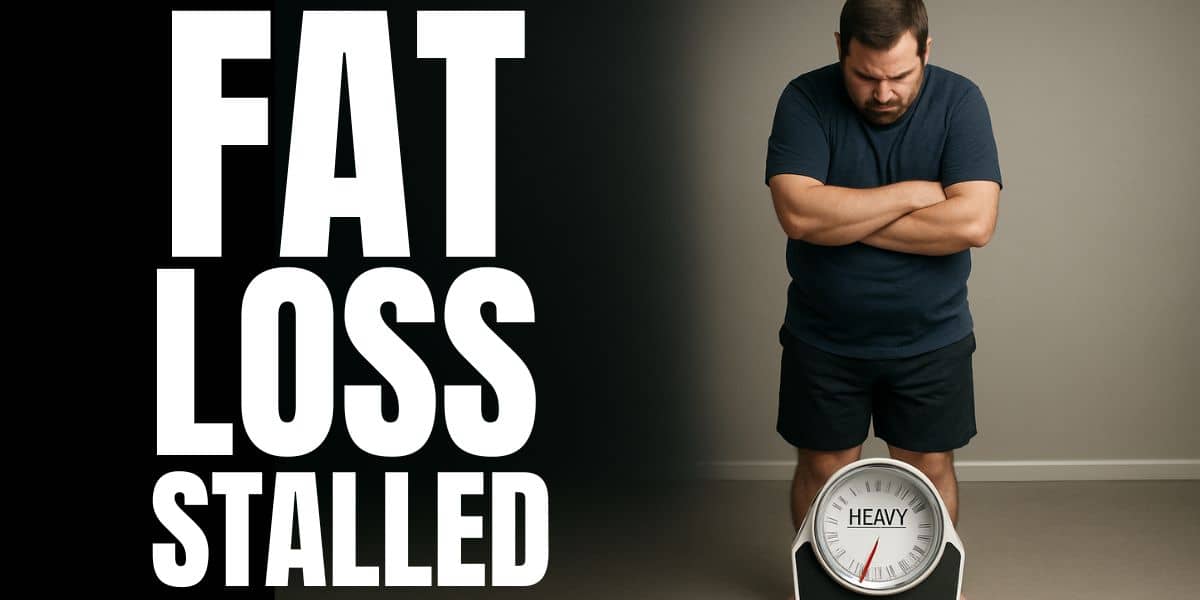
Discover why weight loss slows down, the hidden step most people skip, and how to finally break through plateaus.
You’ve cut the sugar, cleaned up your diet, pushed yourself through grueling workouts, and maybe even dabbled in fasting. At first, the results come quickly—pounds drop, energy lifts, and you feel like you’re finally on track. But then it happens: the dreaded plateau. Your weight stalls, progress slows, and frustration creeps in.
Most people think the solution is to push harder—run longer, eat less, add more workouts. But what if the real reason your weight loss slows down isn’t about doing more—but about neglecting something essential?
The truth is, there’s a forgotten step in the fat-loss equation. Skip it, and your body rebels. Master it, and you’ll unlock the fat-burning potential you’ve been missing.
Let’s dive in.
The Plateau Nobody Talks About
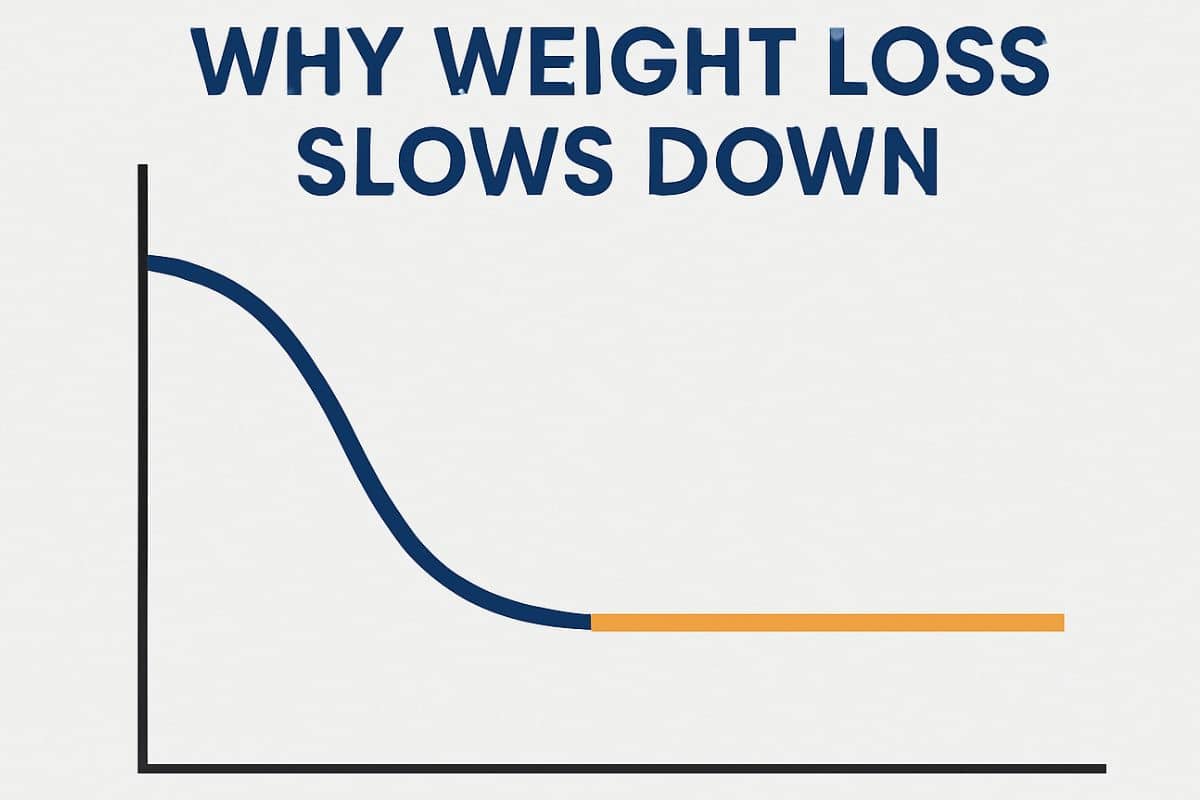
If you’ve ever started a new weight loss plan, you know the honeymoon phase. In the first few weeks, fat seems to melt away. You’re motivated, excited, and the scale confirms it’s working. But then—almost like clockwork—things stall.
This plateau isn’t a sign that your body is broken or that you’re doomed to failure. It’s a natural response. Your metabolism adapts to protect you, especially if it senses too much stress. And here’s the catch: stress doesn’t just come from mental pressure. It comes from overtraining, under-eating, lack of recovery, and even poor sleep.
The result? Your body clings to fat like it’s gold, and the harder you push, the slower the scale moves. Sound familiar?
The Common Myths That Keep You Stuck
Myth #1: “Weight loss is just about calories in vs. calories out.”
🧮 Reality:
This idea sounds logical—and it’s been repeated for decades—but it misses the most important part: your hormones decide what your body does with the calories, not the calorie count itself.
You can eat fewer calories and still store fat if you’re constantly spiking insulin, the hormone responsible for fat storage. This is why someone eating 1,600 calories of sugar-laced “diet foods” might gain weight, while someone eating 2,000 calories of whole foods might lose it.
👉 (For a deeper dive, see This ONE Thing Stores More Fat Than Sugar Ever Could)
Myth #2: “If I eat less, I’ll automatically lose weight.”
🍽️ Reality:
Yes, creating a calorie deficit is part of fat loss—but eating less is not always better. Going too low in calories can trigger metabolic slowdown, muscle loss, and rebound cravings that sabotage long-term results.
What you eat is just as important as how much. Prioritizing nutrient-dense foods, healthy fats, and protein helps stabilize hormones like leptin and ghrelin (hunger and fullness), keeping your metabolism humming. An example? Swapping 100-calorie rice cakes for two boiled eggs and avocado can make all the difference.
👉 (Explore this more in my post – Stop Feeding the Hormone That Keeps You Fat)
Myth #3: “Skipping meals is always unhealthy.”
📉 Reality:
We’ve been told for decades that skipping breakfast or delaying meals “slows your metabolism” or “makes your body hold onto fat.” But the truth is, strategic fasting—when done intentionally—is one of the most effective ways to improve fat-burning, reduce inflammation, and reset your hormones.
Skipping meals doesn’t equal starvation. In fact, people using intermittent fasting protocols like 16:8 (fasting for 16 hours, eating within 8) often report better energy, reduced cravings, and more mental clarity. You’re not depriving your body—you’re giving it time to process what’s already there.
👉 (Read more in my fasting guide – The ONE Thing You’re Missing for Real Meal Plan Results)
Myth #4: “One hack like autophagy will fix everything.”
⚙️ Reality:
Autophagy—the body’s natural clean-up system—is powerful, but it’s not a magic button. Yes, it helps remove damaged cells, tightens skin, and boosts longevity. But chasing autophagy alone without addressing other lifestyle pillars is like tuning your car’s engine while ignoring bald tires and no brakes.
Autophagy works best in the context of an overall healthy lifestyle: clean eating, strategic fasting, quality sleep, and movement. Think of it as one valuable piece of a multi-part strategy—not a standalone fix.
👉 (Details in my autophagy post – Melt Fat, Tighten Skin & Feel 10 Years Younger – Naturally)
Myth #5: “More exercise = faster fat loss.”
🔥 Reality:
It’s easy to think you can outrun a bad diet or sweat your way thin, but fat loss is a hormone game, not just a calorie burn game. When you overtrain—especially without enough fuel or rest—you can trigger a cortisol spike. This stress hormone actually encourages belly fat storage and breaks down muscle.
Real fat loss comes from training smarter, not harder. Compound lifts, walking, mobility work, and short bursts of high-intensity movement are more effective than grinding for hours. Pair that with rest and nutrient timing, and you’ll see better results.
Myth #6: “Recovery doesn’t matter—just push harder.”
🛌 Reality:
This might be the most dangerous myth. We live in a hustle culture that glorifies grind and demonizes rest. But the truth is, you don’t get stronger during workouts—you get stronger during recovery.
Neglecting recovery leads to plateaus, burnout, and even injury. Sleep, rest days, breathwork, sauna, and mobility work aren’t luxuries—they’re essentials. Think of recovery as the hidden lever behind sustainable fat loss, muscle gain, and mental resilience.
📢 Shareable Insight
“Most people don’t plateau because they lack willpower. They plateau because they lack recovery.”
👉 Click to Tweet
So What Does Work for Sustainable Fat Loss?
By now, you’ve probably realized the “eat less, move more” model is broken. If that actually worked long-term, the world wouldn’t be drowning in obesity and chronic disease.
The truth is, sustainable fat loss is about lowering insulin, balancing key hormones, reducing inflammation, and working with your body’s biology—not against it.
Here’s a simple framework that works:
- Lower Insulin Spikes: Cut out processed carbs and seed oils. Focus on whole foods, fiber, and protein. Consider adopting a Low Carb, Keto, or Carnivore Diet to naturally regulate blood sugar and support fat burning.
- Strategic Fasting: Give your body a break from constant digestion. Try 14–16 hour intermittent fasting.
- Nutrient Timing: Less about carb timing, more about eliminating junk entirely. Focus your meals around protein and healthy fats instead of trying to “earn” your carbs.
- Prioritize Sleep & Recovery: Aim for 7–9 hours of sleep and allow your nervous system to reset.
- Walk Daily: Walking burns fat without spiking cortisol. Aim for 8,000–10,000 steps per day.
- HIIT + Strength Training: Add high-intensity interval training and strength work to build muscle, support metabolism, and accelerate fat loss. Just be sure to fully recover each muscle group for 2–3 days before hitting it again. This allows your body to rebuild stronger and prevents hormonal disruption from overtraining.
This is the opposite of crash diets, obsessive calorie counting, or killing yourself in the gym. It’s about building a lifestyle that promotes fat loss naturally.
📢 Shareable Insight
“Fat loss doesn’t happen in the workout. It happens in recovery.”
👉 Click to Tweet
The Science Behind Why Weight Loss Slows Down Without Recovery
When most people think about fat loss, they think in terms of calories. Burn more than you consume, and the weight comes off. That’s true on a very basic level, but the human body isn’t a calculator—it’s a dynamic system constantly adapting to survive.
When recovery is neglected, your body interprets the constant stress from training, dieting, and lack of rest as a threat. In response, it makes subtle but powerful changes to slow down fat loss. Here’s how:
Metabolic Adaptation
Your body is designed for survival. When it senses stress without relief, it adapts by reducing your resting metabolic rate (RMR). This means you burn fewer calories doing the same activities, including sitting, walking, and even sleeping. Many frustrated dieters assume they’ve “broken” their metabolism—but what’s really happening is adaptation due to lack of balance.
Cortisol and Inflammation
Cortisol, often called the stress hormone, rises during intense training. In moderation, that’s fine—it helps mobilize energy. But chronically elevated cortisol (from too much training and too little recovery) leads to fat storage, especially around the belly. Inflammation also rises, making it harder for your body to access fat as fuel.
Muscle Repair and Calorie Burn
Muscle tissue isn’t just about strength—it’s metabolically active, meaning it burns calories even when you’re at rest. When you train, muscles break down. Recovery is when they rebuild stronger. Skip recovery, and muscle growth stalls or even reverses, lowering your daily calorie burn. Over time, this makes fat loss harder.
Research and Real-World Evidence
- Studies of athletes show those who prioritize recovery—sleep, rest days, and active recovery—outperform athletes who just increase training volume.
- In one study, athletes who slept less than 6 hours per night lost significantly less fat than those who consistently got 7–9 hours, despite eating and training the same.
- Real-world example: Many personal trainers notice clients who push themselves daily often plateau, while those who adopt structured training/rest cycles see better long-term fat loss.
Practical Ways to Put Recovery to Work
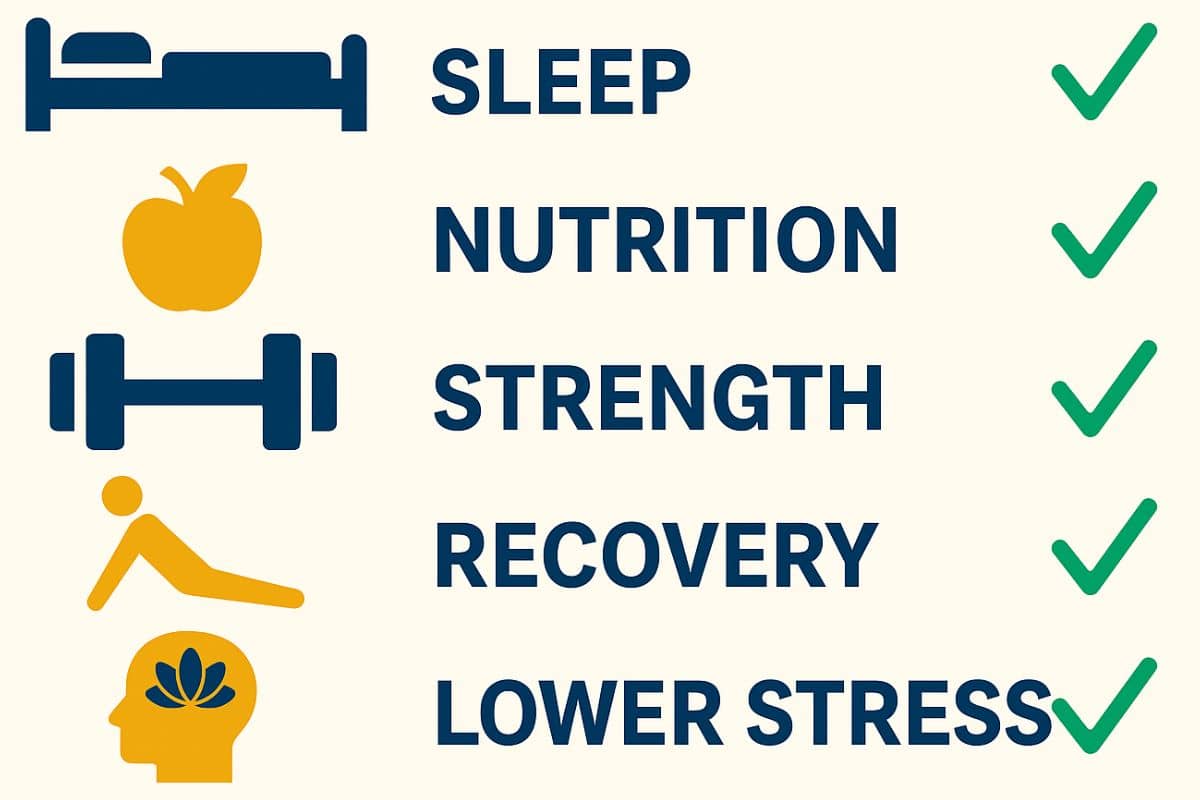
By now, you know recovery isn’t just a “nice to have” — it’s the missing step that determines whether your fat loss accelerates or stalls. But how do you actually make recovery part of your lifestyle without feeling like you’re being lazy? Let’s break it down into the pillars that matter most.
Sleep: Your Fat-Burning Superpower
Think of sleep as the master recovery tool. It’s during deep sleep that your body resets hormones, repairs tissues, and burns fat. Missing sleep is like trying to run a fat-loss program on half power.
- Target: 7–9 hours each night.
- Consistency: Go to bed and wake up at the same time, even on weekends.
- Optimize: Keep your bedroom cool (18–20°C / 65–68°F), dark, and quiet. Limit blue light (phones, TVs) for at least 60 minutes before bed.
- Why it matters for fat loss: Sleep deprivation raises cortisol and ghrelin (hunger hormone) while lowering leptin (satiety hormone). Translation? You eat more, crave more junk, and burn less fat.
Example: One client in my coaching program stalled for months, despite eating clean and exercising daily. We optimized her sleep—earlier bedtime, blackout curtains, no late-night Netflix. Within 2 weeks, the scale started moving again without changing anything else.
Active Recovery: Movement That Heals Instead of Hurts
Many people confuse recovery with inactivity. The truth is, light activity helps speed recovery and keeps fat burning steady.
- What to do: brisk walking, gentle yoga, stretching, cycling at conversational pace.
- How it helps: boosts circulation, delivers nutrients to muscles, clears waste products from training.
- Bonus: Walking on rest days doubles as low-level cardio, burning fat without stressing the body.
Example: Think of elite marathoners—on their “off” days, they don’t sit on the couch. They walk, swim, or cycle slowly. It’s not about calories—it’s about keeping the body primed for adaptation.
Nutrition: Fuel That Repairs and Protects
Training breaks the body down. Nutrition rebuilds it stronger. Without the right nutrients, recovery is compromised, and fat loss slows.
- Protein: Aim for at least 1.6–2.2g of protein per kg of body weight daily. Protein rebuilds muscle tissue, preserving your metabolism.
- Hydration: Dehydration reduces performance and slows recovery. Drink water consistently throughout the day. Add electrolytes if you sweat heavily.
- Anti-inflammatory foods: Omega-3-rich fish, berries, leafy greens, turmeric, ginger. These reduce inflammation so your body can prioritize fat burning instead of fighting stress.
Example: A study comparing high-protein diets to low-protein diets during weight loss found the high-protein group lost more fat and preserved more lean muscle. That’s the recovery edge at work.
Mental Recovery: Reducing Invisible Stress
Stress doesn’t just come from training—it comes from work, family, finances, and even constant notifications on your phone. And here’s the kicker: your body doesn’t differentiate between physical and mental stress. Both raise cortisol.
- Tools that work: meditation, breathwork, journaling, prayer, or even 5 minutes of sitting quietly with no distractions.
- Lifestyle tweaks: limit caffeine after midday, spend time outdoors, disconnect from screens before bed.
- Why it matters: Lower stress = lower cortisol = more efficient fat burning.
Example: One busy entrepreneur I worked with added just 10 minutes of box breathing (inhale 4, hold 4, exhale 4, hold 4) twice a day. Not only did he feel calmer, but his fat loss—stalled for months—picked up again.
Strength Training for Maximum Fat Loss and Recovery
Forget the “grind 6 days a week” model. Recovery-centered strength training delivers better results in less time. The key is intensity, not endless volume.
- Low volume, high intensity: Perform 2 sets to complete failure per exercise. This stimulates growth without overtaxing recovery systems.
- Frequency: Train each muscle group twice per week. That’s enough for growth, but with plenty of time for repair.
- Sample Schedule:
- Day 1: Push (chest, shoulders, triceps)
- Day 2: Legs
- Day 3: Pull (back, biceps)
- Day 4: Rest
- Repeat cycle, with Sunday as full rest.
- Why it works: By keeping volume low but effort high, you give your body maximum stimulus with minimal stress. Recovery days allow muscle to grow, metabolism to rise, and fat to burn.
- Optional Add-on: Walking on off days maintains activity without interfering with recovery.
📢 Shareable Insight
“Less can be more: Two sets to complete failure, plus recovery often beats endless reps and daily grind.”
👉 Click to Tweet
How HIIT + Recovery = Fat Loss Acceleration
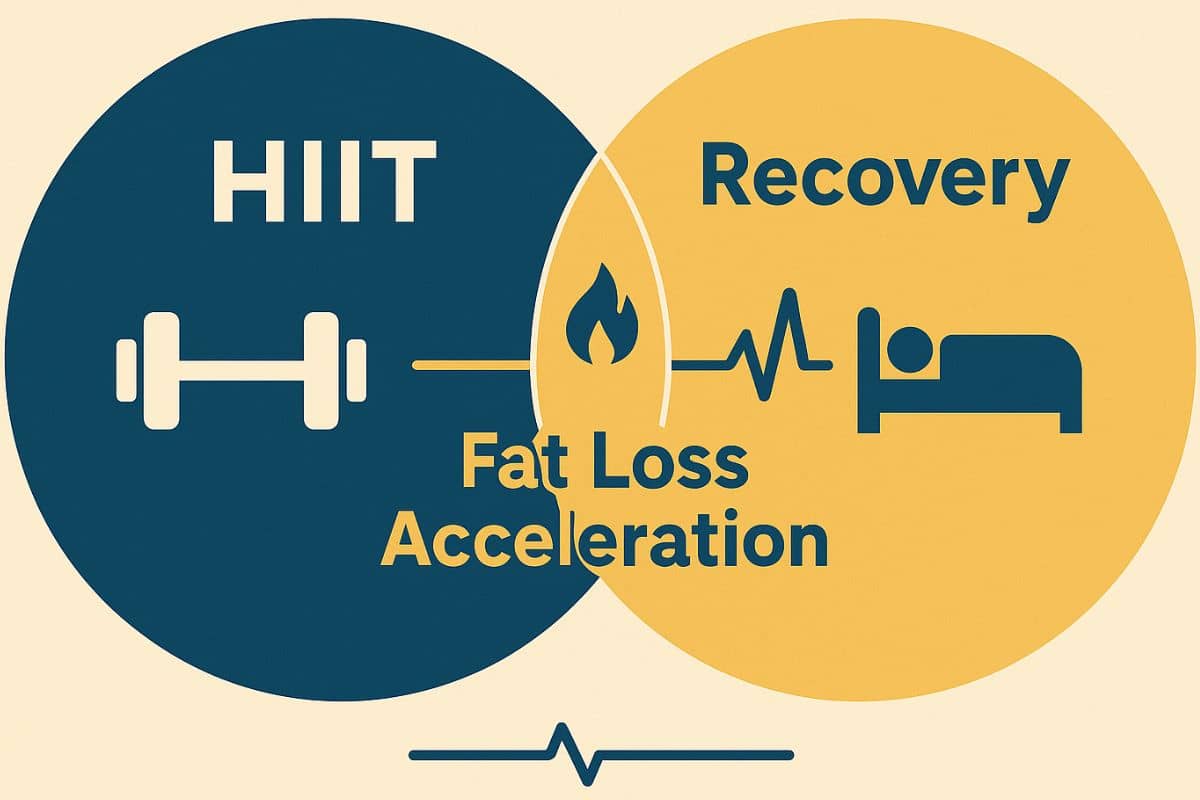
Most people treat HIIT and recovery like opposing forces. On one hand, HIIT is about pushing your limits with short bursts of all-out effort. On the other, recovery feels like stepping back. The truth? They’re not opposites — they’re partners.
When combined correctly, HIIT and recovery form a cycle that turns your body into a fat-burning machine.
Why HIIT Works So Well for Fat Loss
- Afterburn Effect (EPOC): HIIT elevates your metabolism for hours after you’re done, burning more fat even at rest.
- Efficiency: In 20 minutes, you can burn more fat than an hour of steady-state cardio.
- Muscle-Sparing: Unlike long, drawn-out cardio, HIIT helps preserve muscle, which is crucial for keeping metabolism high.
Why Recovery Makes HIIT Actually Work
HIIT only works if your body can adapt to it. Without recovery:
- Cortisol stays elevated, neutralizing the afterburn.
- Muscles never fully repair, so you lose the muscle-sparing benefit.
- Overtraining turns HIIT from a fat-loss booster into another stressor that stalls progress.
The Fat Loss Acceleration Cycle
- HIIT Session: Short, intense effort creates a metabolic spark.
- Recovery Phase: Sleep, nutrition, and active rest allow the body to adapt, repair, and supercharge fat burning.
- Return to HIIT: Your body is stronger, faster, and primed to burn even more fat in the next session.
- Repeat: Each cycle builds on the last, creating compounding fat-loss results.
Real-World Example
- The Daily Cardio Crowd: People who run every day for an hour often plateau. They’re constantly stressed, recovery is minimal, and their metabolism adapts downward.
- The HIIT + Recovery Approach: Someone training HIIT just 2–3 times a week, with strength training and active recovery, often sees faster fat loss in less time — and with fewer injuries and less burnout.
📢 Shareable Insight
“HIIT ignites the fire, but recovery keeps it burning hot enough to melt fat.”
👉 Click to Tweet
Final Thoughts: You’ve Been Lied To (But Now You Know Better)
If you’ve been frustrated by weight loss advice that never works, you’re not alone—and you’re not broken.
You’ve simply been fed the same myths over and over:
- Eat less, move more.
- Just count your calories.
- Push harder.
- Fast weight loss is unhealthy.
It’s all backwards.
The truth is, your body isn’t resisting fat loss—it’s trying to protect you. Years of hormonal disruption, processed food, chronic stress, and sleep deprivation have taught your body to store fat, not burn it.
But now that you know how it actually works—from insulin spikes to strategic fasting, low-carb fueling to proper recovery—you’re equipped to finally take control.
And no, you don’t need to starve yourself or live in the gym.
You need a system that honors how your body was designed to thrive.
Ready to Escape the Diet Trap for Good?
If you’re tired of crash diets, constant hunger, and feeling like you’re fighting your own body…
You need more than another meal plan.
You need a complete reset.
That’s exactly why I created the 51 Day Challenge—a free step-by-step system designed to reboot your metabolism, restore hormonal balance, and turn your body into a fat-burning machine.
Inside, you’ll learn:
- The exact foods to eat (and avoid) for metabolic healing
- How to fast strategically—without burnout
- How to rebuild energy, sleep deeper, and shred fat naturally
- A daily rhythm that’s easy to follow and sustainable
Best of all? It’s 100% free. No gimmicks. No fluff. Just the truth.
👉 Click here to join the 51 Day Challenge now
And finally break free from the cycle for good.
Your Turn: What’s Been the Hardest Part of Losing Weight for You?
If you’ve struggled with weight loss, cravings, low energy, or just feeling like your body is working against you… you’re not alone.
I’ve been there. So have thousands of others who finally broke free using this approach.
💬 Drop a comment below and share your story.
What have you tried that didn’t work?
What are you struggling with most right now?
Let’s turn this into a conversation. Your story might help someone else more than you know.


